Leisure & Activities for Seniors
Staying active and engaged in later life isn’t just about filling time—it’s a powerful tool for maintaining physical health, mental sharpness, and emotional wellbeing. Research consistently shows that seniors who maintain regular leisure activities experience lower rates of depression, better cognitive function, and enhanced quality of life compared to those who become increasingly isolated or inactive.
Yet many older adults face unique challenges when it comes to leisure: physical limitations, accessibility barriers, social isolation, and the psychological hurdle of adapting beloved hobbies as abilities change. This comprehensive resource explores the full spectrum of leisure options available to seniors, from social connections and creative therapies to gentle physical activities and brain training, whilst addressing the practical and emotional challenges of staying active in later life.
Whether you’re looking to maintain existing hobbies, discover new passions, or support an older loved one in staying engaged, understanding the landscape of senior leisure activities can make the difference between merely ageing and thriving in your later years.
Why Leisure Activities Matter for Senior Health and Wellbeing
The benefits of staying active extend far beyond simple entertainment. When seniors engage in regular leisure activities, they’re essentially investing in a multidimensional health insurance policy that pays dividends across physical, cognitive, and emotional domains.
Studies have found that giving up a favourite hobby can increase depression risk by as much as 40%. This isn’t simply correlation—the loss of meaningful activity creates a void that often leads to rumination, decreased sense of purpose, and social withdrawal. Conversely, maintaining engagement in activities you enjoy triggers the release of dopamine and endorphins, natural mood enhancers that combat the stress hormone cortisol.
From a cognitive perspective, activities that challenge the brain—whether through creative problem-solving, social interaction, or learning new skills—help build what neuroscientists call cognitive reserve. Think of it like a savings account for your brain: the more you deposit through stimulating activities, the better protected you are against cognitive decline. Different activities target different neural pathways, which is why variety in your leisure pursuits matters as much as consistency.
Physically, even gentle activities improve circulation, maintain joint flexibility, and support balance—critical factors in preventing falls, which remain one of the leading causes of injury in older adults. The social dimension cannot be overlooked either: regular interaction through group activities combats the isolation that accelerates both cognitive and physical decline.
Social Activities and Community Connections
Human beings are inherently social creatures, and this doesn’t change with age. Yet older adults often face shrinking social circles due to retirement, mobility limitations, or the loss of peers. Maintaining social connections through leisure activities serves as a powerful protective factor against numerous age-related health challenges.
Support Groups and Organised Programmes
Structured programmes offer both consistency and community. Organisations dedicated to senior wellbeing provide everything from hobby clubs to condition-specific support groups. These settings create natural opportunities for friendship whilst providing expert facilitation and safe, accessible environments.
The choice between large organised programmes and smaller, self-directed groups often comes down to personal temperament. Larger programmes offer more diverse activities and professional oversight, whilst smaller local groups may provide deeper connections and greater flexibility. Many seniors find the sweet spot is participating in both: a regular programme for structure and variety, complemented by intimate gatherings with closer friends.
The Risks of Social Isolation
The “I’m fine alone” mindset represents one of the most dangerous pitfalls in senior health. Whilst independence is valuable, research demonstrates that prolonged isolation accelerates cognitive decline at rates comparable to some dementia risk factors. Social interaction stimulates multiple brain regions simultaneously—processing language, reading facial expressions, managing turn-taking in conversation—creating a rich cognitive workout that solitary activities cannot replicate.
Even naturally introverted individuals benefit from regular social contact. The goal isn’t to become a social butterfly, but rather to maintain meaningful connections that provide stimulation, support, and the sense of belonging that humans fundamentally need regardless of age.
Creative Pursuits and Art Therapy for Mental Health
Creative activities offer unique therapeutic benefits that extend well beyond the final product. The process of creating—whether painting, crafting, writing, or music—engages the brain in ways that promote relaxation, self-expression, and emotional processing.
Art Therapy Benefits for Beginners
You absolutely do not need artistic talent to benefit from creative activities. Studies show that creating art reduces cortisol levels even in complete beginners, with the stress-reduction benefits kicking in within minutes of starting. The key lies in the process, not the product.
Art therapy proves particularly effective for processing difficult emotions, including grief, anxiety, and depression. The non-verbal nature of creative expression allows feelings to emerge and be worked through without the need for articulation—especially valuable when words feel inadequate, such as after losing a spouse or processing chronic illness.
Accessing Creative Activities
Creative opportunities exist across a spectrum of settings and price points. Some healthcare services offer art therapy programmes for specific conditions, whilst community centres, libraries, and adult education programmes frequently provide affordable or free creative workshops designed for older adults.
When seeking wheelchair-accessible or adapted art classes, start by contacting local arts organisations directly about their facilities and any adjustments they can make. Many instructors are willing to adapt their teaching approach for participants with limited mobility, vision impairment, or other needs—but they need to know your requirements in advance.
Overcoming the “Not Good Enough” Mindset
Perfectionism kills more hobbies than physical limitations ever could. The belief that creative work must meet some external standard of quality blocks the therapeutic benefits that come from simply engaging in the process. A wonky pot you made yourself provides more cognitive stimulation and emotional satisfaction than admiring a perfect one in a shop window.
If you find yourself abandoning activities after one disappointing session, recognise this as the perfectionism trap. Skill development follows a curve, not a straight line. Every expert was once a beginner, and every masterpiece was preceded by countless practice pieces. Give yourself the grace to be a learner.
Gentle Physical Activities and Adapted Exercise
Physical activity in later life looks different from exercise in younger years, and that’s not only acceptable—it’s appropriate. The goal shifts from performance and achievement to maintaining function, preventing injury, and supporting overall health through sustainable, enjoyable movement.
Soft Gymnastics and Chair-Based Exercise
Soft gymnastics—also called gentle exercise or adapted movement classes—focuses on low-impact activities that improve flexibility, balance, and strength without placing stress on joints. Unlike traditional exercise classes with their emphasis on intensity and repetition, soft gymnastics prioritises controlled, mindful movement that works with your body’s current abilities rather than against them.
Chair-based exercise classes remove the fall risk and balance challenges that make traditional classes unsuitable for many older adults. These sessions can be surprisingly comprehensive, incorporating:
- Upper body strengthening using light weights or resistance bands
- Seated cardio movements that elevate heart rate safely
- Flexibility work for shoulders, arms, and legs
- Coordination exercises that challenge balance whilst seated
Recent evidence suggests that gentle stretching improves balance more effectively than walking alone for adults over 70, because targeted stretching addresses the specific muscle groups and joint mobility that underpin stability.
When to Modify Your Routine
Learning to listen to your body becomes increasingly important with age. During an arthritis flare, pushing through pain doesn’t demonstrate admirable determination—it risks injury and longer recovery times. Modification isn’t failure; it’s intelligent adaptation.
Seasonal changes also warrant routine adjustments. When winter weather makes outdoor activities risky or unpleasant, transitioning to indoor alternatives maintains your activity level without the hazards of ice, cold, or reduced daylight. The hobby itself matters less than the consistency of engagement.
Brain Training and Cognitive Stimulation
The question isn’t whether to exercise your brain, but how to do so most effectively. Not all mentally stimulating activities offer equal cognitive benefits, and understanding these distinctions helps you invest your time wisely.
Effective Brain Training Approaches
Scientific evidence on commercial brain training apps remains mixed. Whilst these programmes may improve your performance on the specific tasks they teach, evidence for transfer effects—improvement in general cognitive function beyond the game itself—is less robust than marketing claims suggest. Word games improve vocabulary but show limited protective effect against Alzheimer’s disease specifically.
When choosing brain training activities, look for those with peer-reviewed research supporting their benefits. Programmes developed in collaboration with neuroscientists and tested in clinical trials offer more reliable benefits than those created purely for entertainment.
Social Games vs Solo Puzzles
Games that combine cognitive challenge with social interaction offer compounded benefits. Playing bridge, for instance, protects brain health more effectively than doing crosswords alone because it engages multiple cognitive domains simultaneously: memory, strategic planning, probability calculation, and social reasoning. The interpersonal element adds layers of cognitive complexity that solitary puzzles cannot match.
That said, solo puzzles retain value, particularly for individuals with social anxiety or limited mobility. The key is matching the difficulty level appropriately—puzzles that are too challenging lead to frustration and abandonment (the “too-hard puzzle mistake”), whilst those that are too easy provide minimal stimulation. Aim for activities that stretch your abilities without overwhelming them.
Timing also matters. Some people find mentally demanding activities energising and prefer them during morning alertness, whilst others use gentler brain training as evening relaxation. Neither approach is inherently superior; what matters is consistency and finding a rhythm that fits your natural patterns.
Adapting Your Favourite Hobbies as You Age
One of the most emotionally challenging aspects of ageing is confronting the reality that beloved hobbies may require modification—or in some cases, replacement. Yet this adaptation, whilst difficult, often proves less traumatic than abandoning meaningful activities altogether.
When and How to Adapt
The optimal time to adapt a hobby is before your condition makes it impossible, not after. Waiting until arthritis has progressed to the point where holding knitting needles causes severe pain leaves you struggling and frustrated. Instead, explore adaptive tools and modified techniques at the first signs of difficulty: ergonomic needle grips, larger needles, lighter-weight yarn, or switching to simpler patterns that require less intricate work.
This proactive approach applies across activities. Gardeners experiencing mobility challenges benefit from raised beds and container gardens before ground-level work becomes impossible. Adapting gradually, one element at a time, feels less like loss and more like evolution.
Preserving Your Identity Through Hobbies
The choice between adapting a current hobby and finding a completely new one carries psychological weight beyond practical considerations. For many people, hobbies form part of their identity: “I’m a gardener,” “I’m a painter,” “I’m a musician.” Abandoning these activities can feel like losing part of yourself.
Whenever possible, adaptation preserves identity better than replacement. A gardener who transitions to container gardening or indoor plants maintains their connection to growing things and can still identify as a gardener. However, when adaptation isn’t feasible, finding a new activity that shares core elements of what you loved about the original can ease the transition. A keen rambler who can no longer walk long distances might find fulfilment in bird watching from accessible locations, maintaining the connection to nature and observation that made rambling meaningful.
Overcoming Common Barriers to Staying Active
Understanding the psychological traps that cause seniors to abandon beneficial activities can help you avoid or escape them. Three patterns appear repeatedly: perfectionism, inappropriate competitiveness, and timing miscalculations.
We’ve already addressed the perfectionism trap—the tendency to abandon activities after a single disappointing session. Recognising that skill development is iterative and that “good enough” often truly is good enough can prevent this premature abandonment.
Competitive spirit, whilst motivating in some contexts, proves dangerous in group exercise classes for seniors. Trying to keep up with fitter or younger participants, or pushing yourself to match your own abilities from decades past, leads to injury rather than improvement. The only meaningful comparison is with your own recent baseline, and the only worthy goal is sustainable engagement.
Finally, don’t underestimate the importance of timing—both when to start activities and when to temporarily modify them. Starting art therapy too soon after trauma may feel overwhelming; waiting too long allows difficult emotions to become entrenched. Beginning hobby adaptation before it becomes absolutely necessary feels less urgent but yields better outcomes. These decisions have no universal right answer, but they warrant thoughtful consideration rather than passive drift.
Leisure activities in later life serve a purpose far beyond filling time—they’re investments in health, independence, and quality of life. By understanding the diverse options available, the specific benefits different activities offer, and the common barriers that prevent engagement, you can build a portfolio of leisure pursuits that supports your wellbeing across all dimensions. The activities that work best are those you’ll actually do consistently, that bring you genuine enjoyment, and that can evolve alongside you as your needs and abilities change.
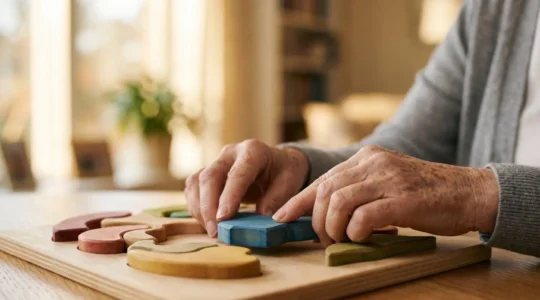
Do Brain Training Games Actually Prevent Memory Loss in Over-65s?
The evidence suggests that while brain training games improve performance on the game itself, they largely fail to provide broad protection against cognitive decline; multi-faceted, social hobbies like playing Bridge or joining a choir are significantly more effective at building…
Read more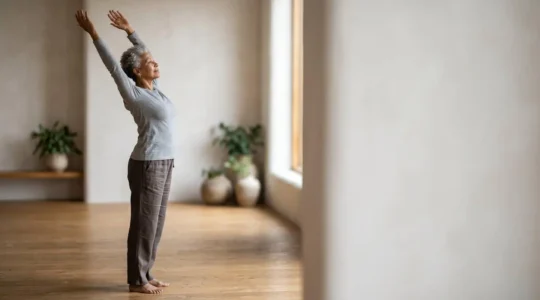
What Is Soft Gymnastics and How Does It Differ from Regular Exercise Classes?
The real value of soft gymnastics for seniors isn’t just gentler movement; it’s about developing “body literacy” to exercise safely and effectively for life. It focuses on improving balance and joint awareness (proprioception) rather than just cardiovascular fitness or strength….
Read more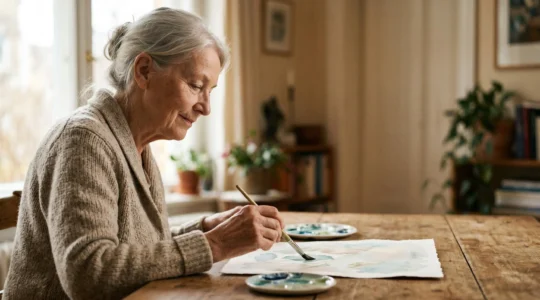
Can Art Therapy Help with Depression Even If You Have No Artistic Talent?
Many people believe you need artistic talent to benefit from art therapy, but this is a fundamental misunderstanding. The truth is that its power to help with depression comes from the creative process, not the finished product. As a registered…
Read more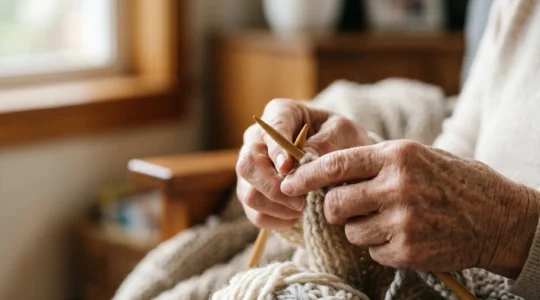
How to Keep Knitting When Arthritis Makes Holding Needles Too Painful
Letting go of a beloved hobby like knitting due to arthritis isn’t just a physical loss; it’s a significant threat to your identity and mental well-being. Adapting your craft with ergonomic tools and new techniques is an advanced skill, not…
Read more
Which Hobbies Reduce Dementia Risk Most According to UK Research?
The key to reducing dementia risk isn’t just any hobby, but those that create a powerful synergy of social, cognitive, and complex engagement. Socially dynamic games like bridge are significantly more protective than solo puzzles due to their requirement for…
Read more