Mobility & Accessibility for PMR
Maintaining independence as mobility changes is one of the most significant challenges facing older adults and people with disabilities. Whether you’re navigating uneven pavements, boarding public transport, or planning a day trip, the right combination of assistive equipment and accessible infrastructure can transform daily life from a series of obstacles into manageable routines.
Mobility and accessibility for persons with reduced mobility (PMR) encompasses far more than wheelchairs and ramps. It’s an interconnected ecosystem of walking aids, sensory navigation systems, adapted public transport, and regulatory frameworks that—when working properly—enable millions to travel, work and socialise independently. Yet the gap between what exists on paper and what works in practice remains frustratingly wide for many users.
This guide explores the core elements that shape mobility and accessibility: the equipment you rely on, the infrastructure designed to support you, and the transport systems that connect you to the wider world. Understanding how these pieces fit together helps you make informed decisions and advocate effectively when systems fail.
Choosing the Right Mobility Equipment for Your Lifestyle
The mobility aid market has expanded dramatically in recent decades, yet many people still end up with equipment poorly suited to their actual needs. The difference between a device that gathers dust and one that genuinely extends your independence often comes down to matching technology to your specific daily routine rather than simply accepting what a showroom recommends.
Walking Frames and Rollators: Understanding the Limitations
Traditional walking frames excel on smooth, level surfaces but struggle considerably on the uneven pavements common throughout older town centres. The narrow rubber feet can catch in gaps between paving stones, whilst the fixed frame design requires you to lift the entire structure with each step—exhausting on longer journeys. Rollators with larger wheels address some of these issues, offering built-in seats and storage baskets that transform them from pure mobility aids into practical shopping companions.
Wheelchairs: Manual versus Powered Options
The choice between manual and powered wheelchairs involves more than budget considerations. Manual chairs demand upper body strength that not everyone possesses, particularly for extended use or hilly terrain. Powered wheelchairs offer independence but require careful attention to battery range, charging infrastructure, and manoeuvrability in tight spaces. Weather resistance becomes crucial—a feature often overlooked until you’re caught in typical British drizzle with electronics that weren’t designed for persistent damp.
Mobility Scooters: Classes, Regulations and Practical Use
Mobility scooters occupy a unique position between assistive devices and vehicles, creating genuine confusion about where and how they can legally operate. Class 2 scooters (limited to 4mph) are restricted to pavements and pedestrian areas, whilst Class 3 models (up to 8mph) can use roads—but require registration, insurance, and tax. The portable boot scooters that disassemble for car transport prioritise convenience over comfort, whilst full-size models better handle distance and uneven terrain but demand dedicated storage and transport solutions.
Tactile Paving: The Navigation System for Visual Impairment
For pedestrians with visual impairments, tactile paving serves as a physical language embedded in the pavement—a system of raised patterns that communicate hazards, directions and safe crossing points through your feet or white cane. When properly installed and maintained, these textured surfaces provide independence that sighted pedestrians rarely appreciate.
Understanding Different Tactile Surface Patterns
Two primary patterns dominate UK streets: blister paving with raised domes signals controlled crossing points, whilst corduroy hazard warning surfaces with parallel bars indicate platform edges and top of stairs. The textural difference is deliberate—your foot or cane should instantly recognise which warning you’re encountering. Colours vary by location and age of installation, with red typically indicating controlled crossings and buff used for platform edges, though consistency remains imperfect across different local authorities.
Navigating When Tactile Paving Is Missing or Degraded
Older town centres frequently lack comprehensive tactile paving installations, creating genuine navigation challenges. Faded or worn tactile surfaces lose their effectiveness, particularly in high-traffic areas where the raised pattern becomes smooth over time. When encountering gaps in coverage, alternative strategies become essential: listening carefully for traffic patterns, using building lines as reference points, and planning routes via known accessible crossings even when they add distance.
Wheelchair Accessibility on Buses: Rights and Reality
Modern low-floor buses theoretically offer excellent wheelchair access, with designated spaces, deployable ramps and legal protections. Yet the daily reality often involves failed ramps, occupied wheelchair spaces, and drivers with varying levels of training and empathy. Understanding both your rights and practical strategies improves the likelihood of successful journeys.
Boarding Procedures and Equipment Failures
When a bus ramp fails to deploy—a frustratingly common occurrence—you’re entitled to wait for the next service or request the driver contact their depot for a replacement vehicle. Positioning your wheelchair correctly in the designated space, facing backwards or sideways depending on the bus design, significantly improves safety during sudden braking or acceleration. The securing straps provided vary in quality and design between operators, and you’re within your rights to refuse inadequate securing equipment.
Managing Space Conflicts and Peak Times
Bus drivers can ask pushchair users to fold buggies and vacate the wheelchair space if needed by a wheelchair user, though enforcement remains inconsistent. Travelling outside peak commuting hours—typically mid-morning or early afternoon—dramatically reduces the likelihood of encountering occupied spaces or crowded conditions that make manoeuvring difficult. Regional services often provide more space and less crowding than urban routes, though frequency may be considerably lower.
Step-Free Access on Rail Networks: Planning Around Infrastructure Gaps
Railway stations present particular accessibility challenges, with many historic stations predating accessibility requirements entirely. Step-free access—the ability to travel from street to platform without encountering stairs—remains the exception rather than the rule on many networks, requiring careful journey planning and backup strategies when lifts fail.
Understanding Coverage and Limitations
Currently, barely over a third of London Underground stations offer complete step-free access from street to train, with some lines far better served than others. Modern networks like the Manchester Metrolink were designed with accessibility as a core requirement, delivering near-universal step-free access that demonstrates what’s possible with proper planning. The disparity becomes stark when comparing new infrastructure against Victorian-era stations where retrofit installations remain economically or structurally challenging.
Using Journey Planning Tools and Monitoring Service Alerts
Transport operators provide accessibility journey planners that filter routes to show only step-free options, though these tools are only reliable when infrastructure data remains current. The critical habit that experienced users develop is checking lift status immediately before travelling—a single out-of-service lift can render an otherwise accessible station completely unusable, forcing lengthy diversions or abandoned journeys. Setting up service alerts for your regular routes provides advance warning of planned maintenance.
Demand-Responsive Transport: Dial-a-Ride and Similar Services
When conventional public transport proves inaccessible or impractical, demand-responsive services like Dial-a-Ride fill a crucial gap, offering door-to-door transport for those unable to use standard buses or trains. These services operate more like shared taxis than fixed-route buses, collecting multiple passengers with different destinations in a single journey.
Booking Requirements and Planning Ahead
The aspect that catches most first-time users is the advance booking requirement—typically 48 hours minimum for non-emergency journeys, with popular times requiring even longer notice. Medical appointments, social events and shopping trips all need planning further ahead than you might naturally think. Registration involves an eligibility assessment demonstrating that standard public transport genuinely isn’t accessible for your needs, though criteria vary between different local authority schemes.
Preparing for Your Journey
Unlike conventional buses with fixed schedules, Dial-a-Ride services provide collection windows rather than exact times—you might be given a thirty-minute window during which the vehicle will arrive. This flexibility allows the service to optimise routes but requires patience and buffer time in your planning. First journeys naturally create anxiety, but drivers are specifically trained in assisting passengers with varying mobility needs, and the shared nature of journeys often creates informal peer support among regular users.
Mobility and accessibility for persons with reduced mobility continues to evolve, with new technologies and changing regulations gradually improving what’s possible. Yet the most empowered users remain those who thoroughly understand their equipment options, know their rights on public transport, and develop practical strategies for navigating infrastructure gaps that persist despite legal requirements. Independence isn’t about perfect systems—it’s about knowing how to work effectively with imperfect ones.

How to Book Dial-a-Ride Services for Non-Emergency Medical Appointments?
In summary: Understand the crucial difference between ‘medical need’ for NHS transport and ‘social need’ for community services. Use proactive booking strategies, like ‘rolling bookings’, to overcome restrictive 48-hour rules. Compare the ‘break-even point’ between subsidised community transport and private…
Read more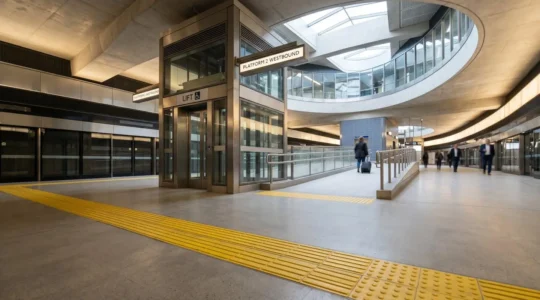
Which London Underground Lines Have the Most Step-Free Stations?
True travel independence on the Tube isn’t just about knowing which stations have lifts; it’s about mastering a proactive pre-journey audit to navigate the network with confidence. Only a third of Tube stations are fully step-free due to the network’s…
Read more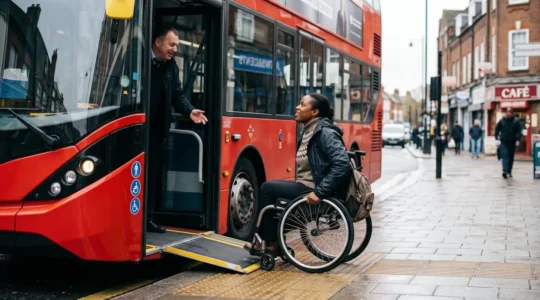
How to Board a UK Low-Floor Bus with a Wheelchair When the Ramp Fails?
In summary: When a bus ramp fails, your confidence depends on proactive strategies, not just reactive complaints. Mastering a ‘confidence toolkit’ of communication, positioning, and legal awareness is key to managing travel anxiety. Understanding the nuances of the law (like…
Read more
Why Do Tactile Paving Colours Differ at UK Train Stations and Crossings?
The confusion and risk from inconsistent tactile paving aren’t just about colour. True safety for visually impaired individuals comes from understanding the ‘functional intent’ behind each surface profile—whether it’s an urgent ‘stop’ signal at a platform edge or a ‘prepare…
Read more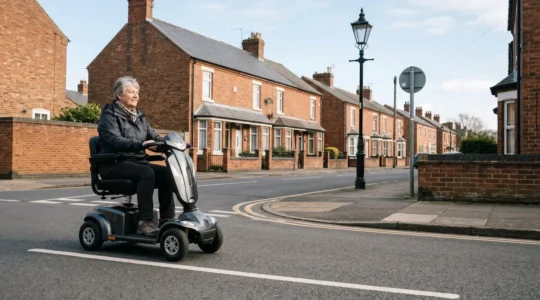
Do You Need to Register Your Mobility Scooter with the DVLA for Road Use?
Registering your Class 3 scooter with the DVLA is not just a legal requirement; it’s the gateway to an entire ‘Road-Ready Confidence System’ for an active UK lifestyle. Legal compliance, symbolised by DVLA registration, is what separates pavement-only scooters from…
Read more
How Do Advanced Mobility Solutions Help You Stay Independent After 70 in the UK?
The secret to lasting independence isn’t buying the most expensive mobility aid, but choosing the one that perfectly matches your real-world UK life. Many seniors make costly mistakes by choosing devices based on showroom floors, not the reality of uneven…
Read more