Senior Care
Caring for an elderly relative or planning for your own later years involves navigating a complex landscape of health services, home modifications, and daily support systems. Senior care in the UK isn’t a single service—it’s an ecosystem of interconnected solutions designed to help older adults remain independent, safe, and healthy at home for as long as possible.
The challenge many families face is knowing which pieces of this puzzle to put in place, when to act, and how to coordinate everything effectively. From understanding NHS transport eligibility to timing a stairlift installation before hospital discharge, each decision impacts quality of life and can mean the difference between a preventable crisis and continued independence. This resource brings together the essential knowledge you need to make informed decisions across every aspect of senior care.
Whether you’re supporting a parent through gradual changes in mobility, managing multiple chronic conditions, or planning proactively for future needs, understanding these core areas will help you build a sustainable care plan that adapts as circumstances evolve.
Medical Transport and Hospital Appointments
Getting to and from medical appointments becomes increasingly challenging as mobility declines, yet maintaining regular healthcare contact is crucial for preventing complications. Understanding your transport options—and their limitations—helps avoid missed appointments and the health consequences that follow.
NHS Patient Transport Services: Eligibility and Reality
NHS Patient Transport is not a general taxi service—it’s reserved for patients whose medical condition means they cannot use public transport or standard taxis, even with assistance. Many families assume it’s automatically available for anyone over a certain age or anyone who doesn’t drive, leading to frustration when requests are refused.
Eligibility typically requires evidence from your GP or hospital consultant confirming that your relative’s medical condition (such as severe mobility impairment, oxygen dependency, or high fall risk) makes other transport unsafe. The key is obtaining supporting clinical documentation that clearly describes functional limitations, not just a diagnosis.
Alternatives and Coordination Strategies
When NHS transport isn’t available or reliable, British Red Cross volunteer drivers, local Age UK schemes, and community transport services offer alternatives, though availability varies significantly by region. For patients with multiple appointments on the same day—common when managing complex conditions—coordinating pickup windows becomes essential to avoid hours-long waits between consultations.
Think of transport coordination like planning connecting flights: you need buffer time, but too much waiting in hospital corridors exhausts frail patients and increases fall risk. Booking return transport proactively, rather than calling when the appointment ends, dramatically reduces wait times.
Fall Prevention and Home Safety Adaptations
Falls are the leading cause of injury-related hospital admissions for over-65s in the UK, with around 30% experiencing at least one fall annually. Most falls happen in familiar home environments during routine activities, making proactive risk assessment essential rather than waiting for an incident to trigger action.
When and How to Audit Your Home for Risks
A fall risk audit should happen at key transition points: after any hospitalisation, when mobility aids are first needed, after a diagnosis affecting balance (such as Parkinson’s or visual impairment), or when medications change. Small environmental hazards—loose rugs, poor lighting on stairs, bathroom grab bars positioned incorrectly—accumulate into significant risk.
Occupational therapists can conduct formal assessments, but families can start with a simple walkthrough focusing on the routes your relative uses most: bed to bathroom, kitchen access, and main living areas. Look for obstacles at ankle height, light switches that require stretching, and any activity that currently feels ‘a bit difficult’—these are your early warning signs.
Timing Major Adaptations Strategically
Installing equipment like stairlifts or walk-in showers involves disruption that can be distressing and even dangerous for frail individuals. The best time for major renovations is often when your relative can stay elsewhere—during planned respite care or a hospital admission (though the latter requires careful discharge coordination).
Ordering equipment like stairlifts typically takes several weeks from assessment to installation. If you wait until hospital discharge is imminent, your relative may come home to an inaccessible bedroom or face delayed discharge while waiting for equipment. The planning paradox: act before the need feels urgent, or face crisis decisions under time pressure.
Detecting and Responding to Loss of Autonomy
Loss of autonomy rarely happens overnight—it’s a gradual erosion of capabilities that families often miss until a crisis forces recognition. Occupational therapists assess autonomy through Activities of Daily Living (ADLs): bathing, dressing, toileting, eating, and transferring (moving from bed to chair). When someone begins struggling with these basic tasks, it signals the need for intervention.
Early Detection Through Daily Living Checklists
A simple weekly checklist tracking whether your relative manages personal care independently, prepares meals safely, takes medications correctly, and maintains home hygiene can reveal subtle declines before they become dangerous. The pattern matters more than individual instances—everyone has off days, but consistent difficulty completing tasks that were previously routine indicates advancing needs.
The most dangerous mistake families make is compensating invisibly. When you start ‘helping out a bit’ with tasks your parent previously managed—pre-preparing meals, organizing medications, prompting hygiene—you may inadvertently accelerate capability loss while masking the true care needs from healthcare professionals conducting assessments.
When Home Care Is No Longer Sufficient
There’s no universal threshold, but warning signs include: repeated falls despite adaptations, wandering or safety judgment impairment (particularly with dementia), inability to summon help during emergencies, or care needs requiring two people for safe transfers. Ignoring these indicators doesn’t preserve independence—it typically leads to emergency hospital admissions under the worst possible circumstances.
Daily Health Monitoring and Early Warning Systems
Seniors who actively monitor daily symptoms experience significantly fewer emergency hospital visits, not because monitoring prevents illness, but because it enables early intervention before minor issues escalate. Think of it as checking your car’s dashboard warning lights rather than waiting for the engine to fail.
The Five-Minute Daily Health Check
Without medical training, anyone can monitor four key indicators: unusual fatigue or weakness, changes in breathing effort, reduced fluid intake or urination, and mental clarity or confusion. These simple observations, tracked consistently, predict many avoidable hospitalisations within 48 hours.
For example, mild dehydration in frail elderly people doesn’t just cause thirst—it triggers confusion, weakness, falls, and urinary tract infections that can rapidly progress to sepsis requiring emergency admission. Spotting reduced drinking over two days and proactively increasing fluids prevents the cascade.
Structured Health Routines for Chronic Conditions
Creating a weekly health routine—regular blood pressure checks, weight monitoring for heart failure patients, peak flow measurements for COPD—provides trend data that’s far more valuable than single readings. A sudden 20-point drop in blood pressure, for instance, may indicate medication issues, dehydration, or infection even when the absolute number appears ‘normal’.
The timing of measurements matters significantly. Blood pressure measured immediately after taking medication shows different patterns than pre-medication readings, yet many patients measure inconsistently and their GP receives misleading data. Establish a routine linked to existing habits—after breakfast, before evening medication—to ensure consistency.
Choosing and Managing Home Care Support
Selecting a home care assistant involves more than checking an agency’s CQC rating. A ‘Good’ rating reflects minimum standards compliance, not whether a particular carer will be compatible with your relative’s personality, cultural preferences, or specific care needs.
Interviewing for Compatibility Beyond Qualifications
During interviews, focus on scenarios rather than credentials: ‘How would you handle it if my mother refuses to bathe?’ or ‘What would you do if you noticed symptoms we haven’t mentioned in the care plan?’ Responses reveal problem-solving approach, communication style, and whether the carer sees their role as task-completion or person-centred support.
Compatibility matters enormously for care acceptance. An experienced, qualified carer who inadvertently dismisses your relative’s concerns or rushes through routines will face resistance, while a less experienced carer who listens attentively and respects autonomy may achieve better cooperation.
The Dangerous Handover Gap
When multiple carers rotate shifts, handover communication failures create serious risks—missed medications, unreported symptoms, or conflicting approaches that confuse patients with dementia. Insist on written handover notes, not just verbal communication, and request to review them periodically. If you notice gaps like ‘seemed a bit off today’ without specifics, push for detailed observation recording.
Medication Management and Safety
Roughly half of UK seniors don’t take prescribed medications as directed, not primarily due to deliberate non-compliance but because complex regimens become unmanageable. Afternoon medications are forgotten more frequently than morning doses because they interrupt daily routines rather than coinciding with established habits like breakfast.
Simplifying Through GP Medication Reviews
Many elderly patients accumulate medications over years as conditions are added and treated, but prescriptions are rarely streamlined. A GP medication review can identify duplications, drugs that are no longer necessary, or opportunities to switch to combination tablets that reduce pill burden.
Request reviews particularly after hospital discharge (when new medications are often added without stopping old ones) and when you notice compliance difficulties. The goal isn’t just reducing pills but aligning medication timing with your relative’s natural routine.
Dangerous Drug Interactions
Over-the-counter painkillers, particularly NSAIDs like ibuprofen, can dangerously interact with blood thinners commonly prescribed for heart conditions. Yet many patients don’t consider ‘just a bit of ibuprofen for arthritis pain’ worth mentioning to their doctor. This is why maintaining an accurate, complete medication list including supplements and occasional over-the-counter drugs is critical for every healthcare interaction.
Coordinating Nursing Care at Home
District nurses provide skilled nursing care at home—wound care, catheter management, medication administration—but many families don’t realise their relative qualifies or that GP referral is required. Hospitals don’t automatically arrange district nursing on discharge; it must be specifically requested.
Setting Up Effective District Nurse Visits
To maximise visit effectiveness, prepare your home so nurses can work efficiently: clear access to the patient, good lighting, clean surfaces for equipment, and easy access to hot water. Small practical barriers like needing to move furniture or inadequate lighting slow visits and may reduce visit frequency if nurses face time pressure.
Communication is vital—keep a visible notebook documenting observations between visits, questions that arise, and any changes in condition. District nurses typically visit regularly but briefly; detailed written information ensures nothing important is missed.
NHS District Nurses vs Private Home Nursing
Private nursing offers more flexibility in scheduling and potentially longer visit duration, but at significant cost. For most clinical needs, NHS district nursing provides equivalent care quality. Private nursing becomes worth considering when very frequent visits are needed (multiple times daily), when scheduling flexibility is critical, or when NHS services in your area face severe capacity constraints causing missed visits.
Managing Multiple Conditions and Specialist Advice
When your relative sees a cardiologist, rheumatologist, and diabetologist, their advice sometimes conflicts—one recommends medications or dietary changes that complicate another specialist’s treatment plan. This happens because specialists optimise for their domain without always accounting for competing priorities.
Creating a One-Page Health Summary
A concise summary listing all diagnoses, current medications, allergies, recent hospitalisations, and key test results saves time at every appointment and ensures specialists have complete context. Update it after any change and bring copies to all consultations. This simple tool often reveals medication duplications or conflicting advice that individual specialists might miss.
Your GP as Care Coordinator
Your GP should theoretically coordinate between specialists, but this requires you to actively involve them—reporting conflicting advice and requesting integrated guidance. For example, dietary recommendations for diabetes management may conflict with heart failure sodium restrictions; your GP can help prioritise or find compromises.
Preventing Avoidable Hospital Admissions
Many hospital admissions for elderly patients are avoidable with earlier intervention. Recognising early warning signs and knowing when to use alternatives to A&E prevents the disruption and risks (hospital-acquired infections, delirium, deconditioning) that come with emergency admissions.
Early Warning Signs Predicting Admission
Beyond the obvious emergencies, watch for: confusion or reduced alertness, significantly reduced oral intake lasting more than a day, urinary symptoms combined with fever or confusion, persistent vomiting or diarrhoea causing dehydration, or sudden inability to manage usual activities. These patterns predict hospital admission within 48 hours if unaddressed.
Using NHS 111 and Hospital at Home Services
NHS 111 can arrange urgent GP appointments, emergency prescriptions, or home visits that prevent A&E attendance. Some areas offer Hospital at Home services where acute treatment (IV antibiotics, monitoring) happens at home rather than on a ward. Not every condition qualifies, but for suitable cases, outcomes are equivalent with far less disruption.
The ‘wait and see’ approach with urinary tract infections is particularly dangerous in frail elderly people. What seems like mild symptoms can progress to sepsis within hours. When you notice typical UTI signs combined with confusion or generally feeling unwell, same-day medical assessment is warranted, not a weekend of monitoring.
ReSPECT Forms and Avoiding Unwanted Treatment
A ReSPECT form (Recommended Summary Plan for Emergency Care and Treatment) documents your relative’s preferences about interventions during medical emergencies, including whether hospital admission aligns with their wishes. Completing this during stable periods ensures emergency decisions reflect their values rather than defaulting to maximum intervention regardless of benefit or burden.
Remote Healthcare: Telehealth and Video Consultations
Video GP appointments expanded significantly in recent years and work well for certain situations—medication reviews, discussing test results, follow-up on known conditions, or mental health consultations. However, GPs cannot diagnose many conditions remotely because they require physical examination.
When Video Works and When It Doesn’t
Skin conditions, joint mobility assessment, abdominal examination, heart and lung sounds—these need in-person evaluation. Requesting video when physical examination is essential wastes time and delays diagnosis. Conversely, insisting on in-person appointments when video suffices reduces availability for those who genuinely need hands-on assessment.
Technical issues matter: poor camera angle, inadequate lighting, or audio problems hide symptoms your GP needs to see. Position the camera at eye level in good natural light, and test audio beforehand. These simple steps make consultations dramatically more effective.
Home-Based Rehabilitation and Physiotherapy
Physiotherapy effectiveness depends critically on consistent daily exercise adherence between therapist visits. Missing just two consecutive days can set recovery back by a week or more because you lose the progressive strengthening you’d built up.
Following Protocols Without Supervision
Your physiotherapist typically visits weekly or fortnightly, meaning you’re self-directing exercises most days. Clear written instructions, ideally with photos or diagrams, prevent technique errors that cause injury or reduce effectiveness. For example, incorrect resistance band positioning during shoulder exercises creates injury risk rather than rehabilitation.
Timing exercises relative to pain medication improves adherence—if you attempt exercises when pain is highest, you’ll naturally avoid them. Schedule them 30-60 minutes after pain relief peaks for better tolerance and more effective movement.
Professional Guidance vs Online Exercise Videos
Generic YouTube exercises can’t replace personalised physiotherapy protocols, especially post-surgery. Knee replacement rehabilitation requires specific progression based on your healing stage, range of motion, and strength—generic videos may push too hard too soon or not challenge you adequately, either risking complications or delaying recovery.
Ageing in Place Successfully: The Complete Picture
Despite similar health conditions, some seniors thrive independently at home while others struggle. The difference isn’t primarily medical—it’s the combination of proactive home adaptation, reliable support systems, regular health monitoring, social connection, and willingness to accept help before crisis forces it.
Successful ageing in place requires periodic reassessment, particularly after major health events like hospitalisation, new diagnoses affecting mobility or cognition, or the loss of a spouse who was providing informal support. The plan that worked last year may be inadequate now, and recognising that isn’t failure—it’s adaptive planning.
Perhaps counterintuitively, seniors who use regular respite care often maintain home independence longer than those who refuse any external support. Short breaks prevent carer burnout, allow home adaptations to be installed without disruption, and provide trial periods for care relationships before they’re urgently needed. The loneliness trap—social isolation despite being ‘well-adapted’ physically—often drives care home moves more than medical need. Maintaining social connections and meaningful activity matters as much as grab bars and medication management.
Senior care isn’t a single decision but an evolving strategy. The families who navigate it most successfully are those who plan proactively, recognise changes early, coordinate services effectively, and remain flexible as needs shift. Each element described here connects to others—transport access enables preventive healthcare, fall prevention reduces emergency admissions, medication management improves chronic disease control. Understanding these connections helps you build a robust, sustainable care plan.
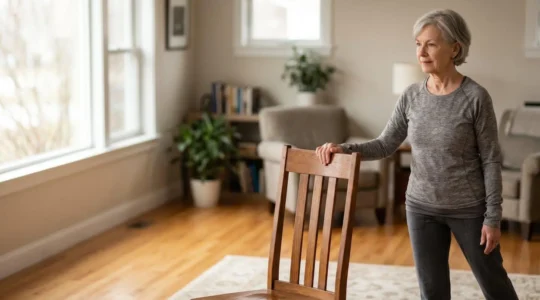
How to Master Your Home Physiotherapy Protocol Without a Therapist Present
In summary: Effective home physiotherapy is not about perfect mimicry, but understanding the principles to adapt exercises safely to your UK home. Consistency is key; missing just two days can cause a significant physiological setback due to muscle de-training. Timing…
Read more
Can Your GP Appointments Be Conducted Entirely by Video Call?
In summary: Video consultations are not just for convenience; they can be highly effective for managing chronic conditions when you are an active, prepared participant. Mastering your technology (tablet settings, camera angles, lighting) is crucial for showing your GP clear…
Read more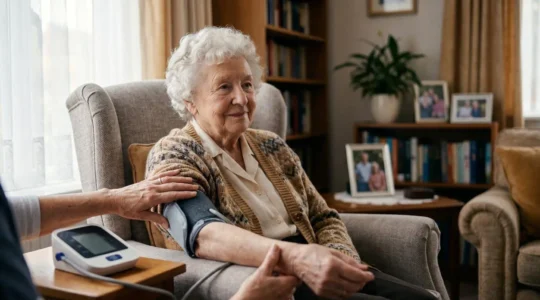
What Early Warning Signs Predict an Avoidable Hospital Admission Within 48 Hours?
Most avoidable A&E visits for seniors are not sudden events, but the final stage of a predictable physiological cascade that an informed carer can interrupt. Subtle changes like mild dehydration or a 20-point blood pressure drop are critical, data-backed predictors…
Read more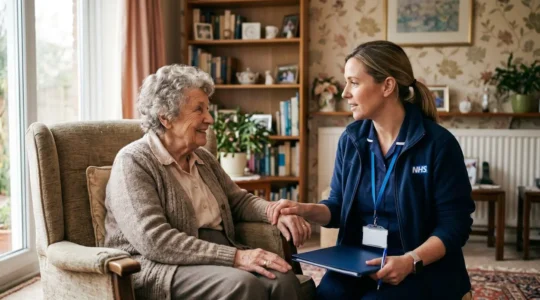
How to Get District Nurses to Visit Your Housebound Parent Regularly?
Securing consistent NHS district nursing isn’t about passively waiting for a referral, but actively managing the process with structured evidence. Systemic “referral gaps” between hospital and community care are a common, documented problem you must anticipate and bridge yourself. Proactive,…
Read more
A GP’s Guide: How to Manage Conflicting Advice from Your NHS Specialists
The key to managing conflicting NHS advice is to stop being a passive patient and become the active ‘central information hub’ for your own care. Contradictions often arise from systemic issues within the NHS, not a lack of expertise from…
Read more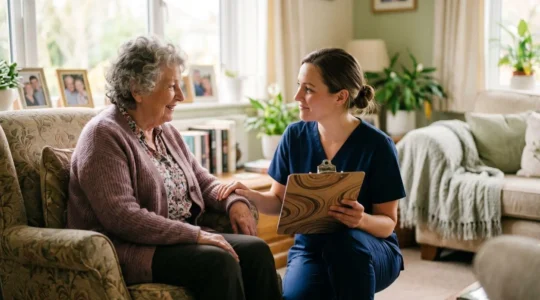
What Should a Good Home Nursing Care Plan Include for Someone with COPD?
A good COPD care plan is not a document that gathers dust; it is a live, data-driven tool that empowers you to secure the right NHS support for your relative. Generic, task-based plans often fail to capture the complexity and…
Read more
Why Do 50% of UK Seniors Not Take Their Medications as Prescribed?
The common belief is that seniors miss medications due to forgetfulness. The truth is, it’s often a system failure, not a memory failure. Complex schedules and environmental barriers create “cognitive load,” making mistakes more likely. Simple, low-tech tools and proactive…
Read more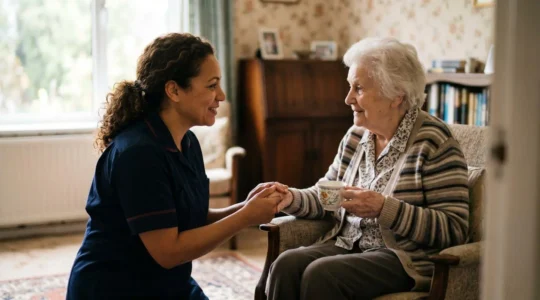
Beyond the Brochure: How to Find a Genuinely Reliable Home Care Assistant in the UK
The reliability of a care agency isn’t found in its CQC rating, but in the systems you implement to manage quality. A ‘Good’ CQC rating is the standard, not a sign of excellence; you must look deeper into specific safety…
Read more
How to Create a Weekly Health Routine That Keeps You Out of A&E?
The secret to staying out of hospital isn’t just following doctor’s orders; it’s becoming the lead analyst of your own health to manage the NHS proactively. Turning vague feelings into simple daily data points can dramatically reduce emergency visits by…
Read more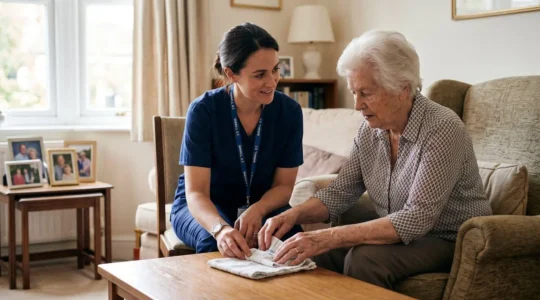
How Do Occupational Therapists Measure Loss of Autonomy for Care Assessments?
Contrary to common belief, assessing a parent’s loss of autonomy isn’t about listing what they can no longer do; it’s about understanding how they think and problem-solve through daily life. An Occupational Therapist (OT) assessment evaluates functional cognition—planning, sequencing, and…
Read more