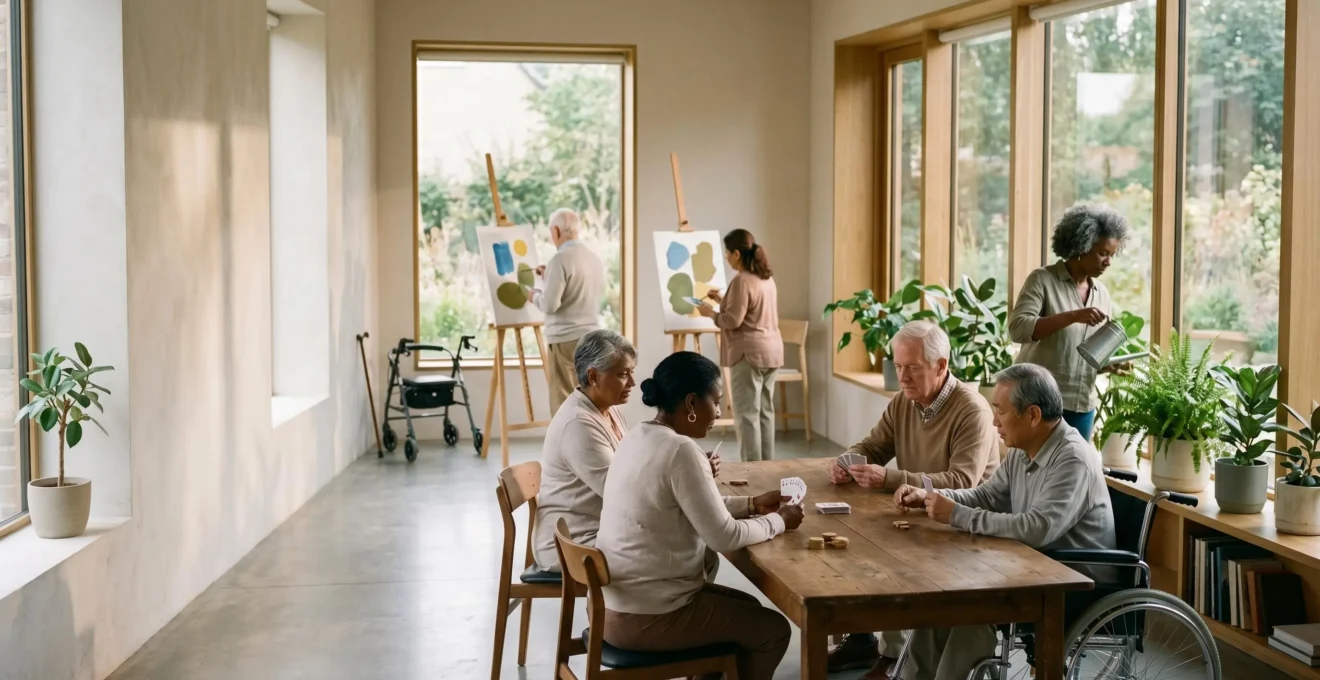
The key to reducing dementia risk isn’t just any hobby, but those that create a powerful synergy of social, cognitive, and complex engagement.
- Socially dynamic games like bridge are significantly more protective than solo puzzles due to their requirement for communication and teamwork.
- The risk of dementia is directly linked to social isolation, a factor more impactful than many realise, with UK data showing measurable changes in brain volume.
Recommendation: Focus on activities that build “cognitive synergy” by challenging your mind in a shared, real-world context to most effectively build your brain’s resilience.
For years, the advice for maintaining a sharp mind in later life has been consistent and, frankly, a little predictable: do crosswords, try a sudoku puzzle, and stay active. While this guidance is well-intentioned, it barely scratches the surface of what truly protects our brains. It’s a bit like advising an aspiring chef to simply “use a pan.” The real magic lies in understanding which ingredients to combine and why. It’s never too late to start, and the benefits of engaging your brain begin the moment you try something new.
The latest research, much of it conducted right here in the UK, is painting a far more nuanced and exciting picture. It reveals that not all activities are created equal when it comes to building our “cognitive reserve”—the brain’s ability to withstand neurological damage. The most powerful protection doesn’t come from a single, solitary activity, but from a rich interplay between different types of stimulation. This concept, which we can call cognitive synergy, is the secret ingredient.
This article moves beyond the platitudes. We will delve into specific UK-based studies and expert analysis to understand why some hobbies offer superior protection. We’ll explore why playing a game of bridge with friends can be more beneficial than doing a crossword alone, how to find activities that are both engaging and accessible, and what the evidence says about the true value of those popular “brain training” apps. By understanding the *why* behind the what, you can make informed choices to build a lifestyle that is not only enjoyable but is actively fortifying your long-term cognitive health.
This guide unpacks the science behind the most effective hobbies for dementia risk reduction, providing clear, evidence-based insights to help you build a resilient and engaged mind for the years to come.
Summary: Unpacking the UK Research on Hobbies That Build Cognitive Resilience
- Why Does Playing Bridge Protect the Brain Better Than Doing Crosswords Alone?
- How to Find Wheelchair-Accessible Art Classes Near You in the UK?
- Age UK Activity Programme vs Self-Directed Hobbies: Which Improves Wellbeing More?
- The “I’m Fine Alone” Mistake That Accelerates Cognitive Decline in Isolated Seniors
- When Should You Switch from Outdoor Gardening to Indoor Hobbies to Stay Active in Winter?
- Why Do Word Games Improve Vocabulary but Not Protect Against Alzheimer’s?
- Diabetes UK vs Local Seniors’ Group: Which Support Network Helps More?
- Do Brain Training Games Actually Prevent Memory Loss in Over-65s?
Why Does Playing Bridge Protect the Brain Better Than Doing Crosswords Alone?
The long-held belief that any puzzle can keep the mind sharp is being challenged by compelling research. While activities like crosswords are certainly beneficial, they represent only one piece of the cognitive puzzle. The reason games like bridge show a greater protective effect against dementia lies in the concept of cognitive synergy—the powerful combination of mental, social, and strategic challenges.
A crossword is a solitary endeavour, primarily testing vocabulary and memory recall. Bridge, in contrast, is a dynamically complex activity. It demands concentration, logic, memory, and problem-solving, but crucially, it layers these with a vital social component. You must communicate with a partner, interpret their signals, adapt your strategy in real-time, and navigate the social dynamics of the game. It is this multi-layered demand that builds a more robust cognitive reserve. Indeed, research comparing different cognitive activities shows that while doing crosswords four days a week is linked to a significant benefit, activities involving cards and board games saw a 63% lower incidence of dementia, compared to 47% for puzzles.
This “social scaffolding” is not an optional extra; it is a core mechanism of brain protection. As one analysis of bridge’s cognitive benefits notes:
Bridge needs four people—you can’t play alone. That social piece adds benefits that solo crosswords can’t match. Working with a partner takes communication skills, empathy, and reading subtle signals.
– Bridge cognitive research analysis, Playing Bridge Keeps Your Mind Sharp—The Science Finally Caught Up
This blend of intellectual challenge and social engagement forces the brain to build and maintain more flexible and resilient neural networks, providing a defence that a simple, solitary puzzle cannot replicate.
How to Find Wheelchair-Accessible Art Classes Near You in the UK?
Engaging in creative hobbies like painting or pottery is an excellent way to stimulate the brain, but physical limitations can often feel like a barrier. The good news is that accessibility is increasingly a priority for venues across the UK. Finding a wheelchair-accessible art class is not just about finding a building with a ramp; it’s about ensuring the entire experience is welcoming and enables full participation. The key is to ask the right questions before you even leave the house.
Start your search with resources like your local council’s website, community centres, or charities like Age UK, which often list local groups and activities. Online platforms like “AccessAble” provide detailed accessibility guides for thousands of venues. Once you have a shortlist, the next step is direct communication. Calling or emailing the venue directly allows you to confirm specifics that are crucial for a comfortable and enjoyable experience. This proactive approach prevents disappointment and ensures the focus remains on creativity, not logistical hurdles.
An accessible environment goes beyond step-free access. It includes things like appropriate table heights, the space to manoeuvre around the studio, and accessible toilet facilities. Don’t hesitate to be specific about your needs. A truly inclusive venue will welcome your questions and be happy to provide the information you need to feel confident in attending. To empower your search, use the following checklist to guide your conversation with a potential venue.
Your Pre-Visit Accessibility Checklist: Art Venues
- Initial Contact: Contact the venue beforehand to check their facilities and the arrangements they have for wheelchair users.
- Access to Space: Ask about step-free access not just to the building, but to the specific classroom or activity space you’ll be using.
- Facilities Check: Inquire about the availability and location of accessible toilets, ensuring they are on the same floor as the activity.
- Booking & Spacing: Check if dedicated wheelchair spaces are available and whether booking them in advance is required to guarantee a spot.
- Workspace Ergonomics: Ask about table heights and whether adjustable or specifically designed accessible seating is provided to ensure comfort during the class.
- Companion Policy: Confirm whether companion or carer tickets are available, and if they are offered at a discounted or free rate.
Age UK Activity Programme vs Self-Directed Hobbies: Which Improves Wellbeing More?
When it comes to boosting wellbeing and cognitive health, a common question arises: is it better to join a structured programme, like those offered by Age UK, or to pursue one’s own hobbies independently? The research suggests the most powerful approach is not an “either/or” but a “both/and.” Both structured and self-directed activities play unique and complementary roles in protecting the brain.
Structured programmes provide invaluable social scaffolding. They remove the organisational burden, create instant social networks, and offer a consistent schedule that helps build routine and combat isolation. For someone who has been less active or has lost confidence, the gentle encouragement and ready-made community of a guided programme can be a critical first step. This is supported by large-scale UK research showing that participation in groups for art, craft, or music is a key factor in long-term cognitive health.
Case Study: The UK Million Women Study
A landmark UK study followed over 850,000 women with an average age of 60 for more than a decade. It examined their participation in activities like adult education and art groups. The findings provided strong evidence that consistent engagement in such cognitively stimulating and social group activities is a crucial component in preventing dementia, reinforcing the recommendations found in national and international health guidelines.
However, self-directed hobbies are equally important. They foster a sense of autonomy, mastery, and personal identity. Whether it’s tending a garden, researching family history, or learning a musical instrument, these are activities driven by intrinsic passion. This personal investment can lead to a deeper, more sustained level of engagement. Furthermore, recent analysis reveals that the sheer number and variety of hobbies matter. Having multiple hobbies was associated with about a 23% reduction in dementia risk, suggesting that a diverse “portfolio” of interests is highly protective. The ideal strategy, therefore, is to combine the benefits of both: use a structured programme to build social connections and discover new interests, while also nurturing personal passions that provide a deep sense of purpose.
The “I’m Fine Alone” Mistake That Accelerates Cognitive Decline in Isolated Seniors
A sense of independence is a prized possession, but when it morphs into social isolation, it can become one of the most significant, yet underestimated, risk factors for cognitive decline. The “I’m fine alone” mindset, while often born from self-reliance, inadvertently closes the door on the very social stimulation the brain needs to stay healthy. This is not a matter of opinion or personality preference; it is a stark biological reality confirmed by extensive UK research.
Data from Alzheimer’s Research UK is unequivocal: social isolation is linked to a 25% higher risk of developing dementia. This isn’t a simple correlation; scientists can now see the physical impact of loneliness on the brain. The constant, dynamic engagement that comes from interacting with others—reading facial expressions, adjusting to conversation flow, sharing experiences—is a form of high-intensity brain exercise. When this is removed, crucial brain regions can begin to atrophy.
This physical change was starkly illustrated in a major study using data from the UK Biobank cohort. Researchers made a direct connection between a person’s social life and their brain’s physical structure. As the researchers noted, the consequences of isolation are measurable:
Socially isolated individuals had lower brain volumes in temporal, frontal, and other regions including the hippocampus. Mediation analysis showed that the identified brain volumes partly mediated the association between social isolation at baseline and cognitive function at follow-up.
– UK Biobank Cohort Study researchers, Associations of Social Isolation and Loneliness With Later Dementia
Recognising this link is the first step. The solution is not to abandon independence, but to redefine it. It means proactively scheduling social contact, whether it’s joining a club, volunteering, having regular phone calls, or participating in a community group. It’s about viewing social interaction not as a pleasant pastime, but as an essential nutrient for a healthy, resilient brain.
When Should You Switch from Outdoor Gardening to Indoor Hobbies to Stay Active in Winter?
For many, gardening is the perfect hobby, combining physical activity, cognitive planning, and a connection to nature. But as the British weather turns and winter draws in, the question of how to maintain that active engagement becomes crucial. The answer isn’t to hibernate, but to pivot. The key is to view your hobbies as a year-round portfolio, with a seamless transition plan from outdoor pursuits to enriching indoor activities.
The decision to switch should be guided by safety and comfort, not by a specific date on the calendar. When the ground becomes hard, slippery, or frozen, and the cold poses a greater risk of falls or health complications, it’s time to bring your activities indoors. This isn’t an admission of defeat; it’s a strategic move to ensure you remain active and engaged, which is the ultimate goal for brain health. The imperative to stay active is clear, as the latest Lancet Commission found that up to 40% of dementia cases worldwide may be linked to lifestyle factors we can change. This empowering statistic highlights that our daily choices, season by season, have a profound impact.
Creating your “winter portfolio” can be an exciting process. Think about what aspects of gardening you love. Is it the planning and design? Transition to indoor garden planning, sketching out next year’s beds, or researching new plant varieties. Is it the creative, hands-on aspect? Try indoor hobbies like watercolour painting, model-making, knitting, or cooking complex new recipes. Is it the gentle physical movement? Consider joining a local Tai Chi, yoga, or dance class. The goal is to replace the specific benefits of your summer hobby with indoor equivalents, ensuring that your mind and body continue to receive the stimulation they need to thrive, no matter the weather.
Why Do Word Games Improve Vocabulary but Not Protect Against Alzheimer’s?
It’s a common assumption that activities which feel mentally challenging, like word games, must be building a strong defence against cognitive decline. While these games are excellent for maintaining and even expanding vocabulary—a concept known as “crystallised intelligence”—they don’t necessarily build the broader, more flexible “fluid intelligence” needed to significantly reduce Alzheimer’s risk. The distinction is crucial.
Word games often involve accessing existing knowledge within well-worn neural pathways. You are retrieving a word you already know from your mental dictionary. This is a valuable exercise, but it’s different from building new pathways or strengthening the brain’s overall executive functions like problem-solving, adaptability, and complex reasoning. Protecting against a complex disease like Alzheimer’s requires a more holistic workout for the brain, one that involves dynamic complexity and novelty.
Research confirms this nuanced view. Studies show that while literacy-based tasks do offer some protection, their effect is part of a much larger picture. For instance, Australian research from 2023 demonstrates that while literacy and critical thinking tasks… were linked to a 9-11% lower dementia risk, this is just one component. The same research noted a distinct, albeit slightly smaller, benefit from creative activities. This reinforces the idea that a varied “cognitive diet” is more effective than focusing on a single type of mental exercise. As researchers have pointed out, both cognitive and social activities have independent, beneficial roles.
Engagement in cognitive and social leisure activities may be beneficial for overall dementia risk, independent of each other and other risk factors. Both types of activities may be potential targets for dementia prevention measures and health advice initiatives.
– L. A. Duffner et al., The role of cognitive and social leisure activities in dementia risk
Therefore, word games should be seen as one tool in a much larger toolkit for brain health. They are a fantastic way to stay sharp, but they should be supplemented with other hobbies that challenge different parts of the brain—especially those involving social interaction, creativity, and new learning.
Diabetes UK vs Local Seniors’ Group: Which Support Network Helps More?
The need for social connection is paramount for cognitive health, but does the *type* of group matter? For instance, for someone with diabetes, is it more beneficial to join a specific health support group like those organised by Diabetes UK, or a general-interest local seniors’ group? The answer, according to emerging research, is that the most resilient social network is a diverse one. Relying on a single type of support, no matter how good, may be less effective than building a varied “social portfolio.”
A health-specific group like Diabetes UK provides invaluable, targeted support. It offers a space to share experiences with people who have a deep, empathetic understanding of a specific health challenge. This can reduce feelings of isolation related to the condition, provide practical management tips, and offer a powerful sense of shared identity. This type of support is crucial for managing the condition’s physical and emotional burdens.
However, a general-interest seniors’ group—a book club, a walking group, a local history society—offers something different but equally vital: social diversity. These groups connect you with people based on shared interests rather than a shared health status. This widens your social circle, exposes you to new ideas and perspectives, and encourages you to engage in activities unrelated to your health condition. This mental “switching off” from a patient identity is incredibly beneficial for overall wellbeing.
Case Study: UK Biobank and Social Capital
A major study using data from over 500,000 people in the UK Biobank investigated the link between social life and dementia indicators. The researchers found that factors related to “social lifestyle,” including the diversity of social connections, were directly associated with risk factors for neurodegeneration. The findings underscore the importance of building broad “social capital” through varied connections, suggesting that a network of diverse, interest-based friendships provides a unique form of cognitive protection that a single-focus support group may not offer alone.
Therefore, the question is not about which group helps *more*, but about understanding that they help *differently*. The ideal approach is to engage with both. Use a health-specific group for targeted support and empathy, and use a general-interest group to build a wider, more diverse social world that stimulates your brain in completely different ways.
Key takeaways
- Social engagement is non-negotiable: UK research confirms that consistent, meaningful social interaction is one of the most powerful and evidence-backed strategies for reducing dementia risk.
- Complexity is crucial: Hobbies that combine multiple challenges (cognitive, social, physical), like bridge or gardening, build more robust cognitive reserve than simple, repetitive tasks like solo puzzles.
- Variety is your best defence: The most protective strategy is to cultivate a diverse “portfolio” of hobbies that engage different parts of your brain and adapt to the seasons, ensuring consistent stimulation year-round.
Do Brain Training Games Actually Prevent Memory Loss in Over-65s?
The market for digital brain training games is booming, with many promising to sharpen memory and ward off dementia. But as a cognitive health researcher, I must stress that the scientific evidence is complex and far from a blanket endorsement. The answer to whether these games prevent memory loss is a qualified “it depends,” and understanding the qualifications is key.
On one hand, there is evidence that specific types of training can yield specific, measurable results. The landmark Advanced Cognitive Training for Independent and Vital Elderly (ACTIVE) trial, for example, found that targeted training on processing speed had a remarkable long-term effect. The study found that participants who did up to 23 hours of cognitive speed training… were found to have a 25% lower risk of developing Alzheimer’s over a 20-year follow-up. This shows that intensive, specific training can indeed have a protective effect. However, this was a highly specific intervention, not a general-purpose game.
On the other hand, major UK health bodies urge caution. The Alzheimer’s Society explicitly states that the benefits of most commercial brain training games may not translate into real-world improvements or a reduced risk of dementia.
There is no strong evidence that brain training activities will reduce a person’s risk of developing dementia. Brain training can improve memory and thinking, but its effect on dementia has not been proven.
– Alzheimer’s Society UK, Brain training and dementia guidance
The most effective “brain training” may not come from a screen at all. It comes from engaging in activities with dynamic, real-world complexity. Cooking a new recipe, for example, is a powerful cognitive workout. It involves planning, sequencing, timing, fine motor skills, sensory integration, and adapting to unexpected problems—a far richer challenge than most repetitive digital games. These real-world hobbies build the flexible, resilient cognitive skills that are truly protective.
The most important finding from all this research is that taking action matters. Start today by exploring one new activity—whether it’s investigating a local group, trying an online art class, or simply calling a friend to plan a game. Every step towards active engagement is a step towards a more resilient brain.