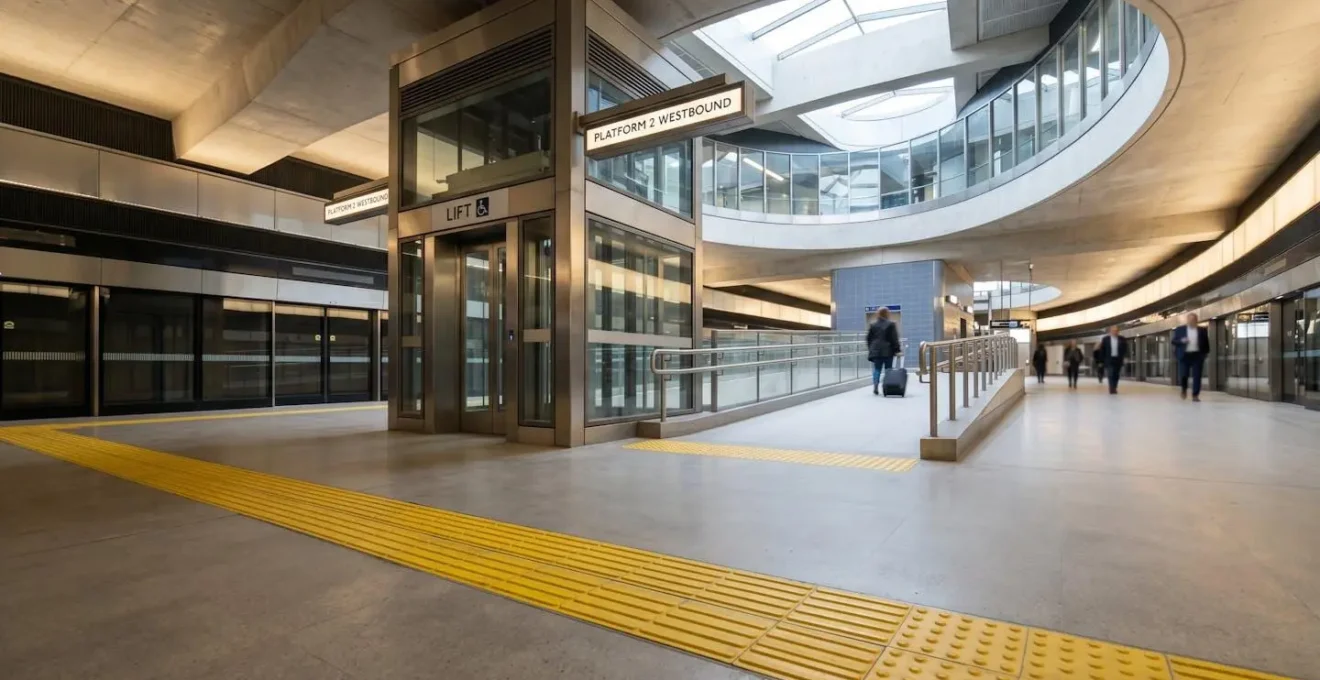
True travel independence on the Tube isn’t just about knowing which stations have lifts; it’s about mastering a proactive pre-journey audit to navigate the network with confidence.
- Only a third of Tube stations are fully step-free due to the network’s Victorian-era origins, making real-time planning essential.
- Using the TfL Go app’s ‘step-free’ mode and live lift status checker is the single most effective way to prevent in-journey disruptions.
Recommendation: Before every journey, perform a quick accessibility check: filter your route on the TfL Go app, verify live lift statuses, and have an alternative route in mind.
For any wheelchair user or parent with a pushchair, planning a trip across London can feel like a high-stakes puzzle. The fear of arriving at a station only to be met with a broken lift or an unannounced flight of stairs is a common source of anxiety. While many guides focus on static lists of accessible stations, this often isn’t enough. The reality of London’s transport network is dynamic; accessibility isn’t just a feature of a station, but a live status that can change at a moment’s notice.
The key to confident, independent travel lies not in memorising maps, but in adopting a strategic mindset. This guide moves beyond simple lists to give you a complete system for planning and executing accessible journeys. We will introduce the concept of a ‘pre-journey accessibility audit’—a simple yet powerful routine that empowers you to anticipate issues, understand the infrastructure around you, and know your rights when things go wrong. From using digital tools effectively to understanding the nuances of platform design, you will learn to navigate the network not just as a passenger, but as an informed advisor for your own travel needs.
This article will provide a comprehensive breakdown of the tools and knowledge required for seamless travel. We will explore why full accessibility remains a challenge, how to master TfL’s planning tools, what your rights are during disruptions, and how to understand the very design of the stations themselves. Prepare to transform your approach to travelling in London.
Summary: A Strategic Approach to Accessible Tube Travel
- Why Are Only 36% of London Underground Stations Fully Step-Free?
- How to Use the TfL Journey Planner to Avoid Stairs Completely?
- London Underground vs Manchester Metrolink: Which Is More Accessible?
- The Lift Closure Alert You Must Check Before Every Tube Journey
- How to Time Your Tube Journey to Avoid Platform Crowds at Step-Free Stations?
- UK Tactile Paving vs European Systems: What Changes When You Travel Abroad?
- How to Complete a Successful Blue Badge Application in England Without Rejection?
- Why Do Tactile Paving Colours Differ at UK Train Stations and Crossings?
Why Are Only 36% of London Underground Stations Fully Step-Free?
The core reason for the London Underground’s accessibility challenge is its age. As the world’s first underground railway, opened in 1863, its foundations were laid in an era when public accessibility was not a consideration. Many of the 272 stations were built with narrow tunnels, winding passages, and multiple levels designed to move large crowds on foot, not to accommodate wheelchairs or pushchairs. Retrofitting this Victorian infrastructure is a monumental task, both financially and logistically. According to the latest data, only 94 Underground stations (34%) are currently step-free from street to platform.
To truly grasp the scale of the challenge, one only needs to look at the immense effort required to upgrade a single station. These projects involve far more than simply installing a lift; they often require excavating new tunnels and re-routing complex underground utilities, all while keeping one of the world’s busiest transport networks operational. The complexity and cost are a major barrier to faster progress, though modern lines like the Jubilee and Elizabeth lines, built with accessibility in mind from the start, show what is possible. The Elizabeth line, for instance, is entirely step-free.
Case Study: The £700 Million Bank Station Upgrade
The transformation of Bank station, completed in 2023, provides a clear example of the costs and complexities involved. The seven-year project required the construction of over 1,000 metres of new tunnels to create space for new platforms and access points. A key outcome was the installation of two new passenger lifts, providing step-free access to the Northern line for the first time. The project also delivered a new, more spacious entrance and raised platforms for level boarding. This single upgrade, which improved capacity by 40%, took the work of 550 people daily at its peak and demonstrates why making the entire network accessible is a generational, multi-billion-pound endeavour, as detailed in reports on the major upgrade of Bank station.
Understanding this historical context is the first step in building your travel strategy. It explains why a proactive approach is necessary, as you cannot assume a station will be accessible by default. It underscores the importance of using modern tools to navigate a legacy system.
How to Use the TfL Journey Planner to Avoid Stairs Completely?
The single most powerful tool for ensuring an accessible journey is the official Transport for London (TfL) Go app. While paper maps provide a static overview, the app offers a dynamic, real-time picture of the network’s accessibility. It is the cornerstone of any effective ‘pre-journey audit’. Instead of just checking if a station is marked as “step-free,” the app allows you to plan a complete, viable route based on the network’s status at the exact moment you intend to travel. This moves you from hoping your journey will be accessible to confirming it will be.
To begin, you must activate the ‘step-free mode’ within the app’s settings. This simple toggle transforms the map and journey planner, filtering out any routes that involve stairs. The true power of the app, however, lies in its detailed, station-level information. Tapping on any station reveals critical data for a successful journey, including platform gap width, step height, and the availability of boarding ramps. This level of detail allows you to assess not just whether you can get to the platform, but whether you can comfortably and safely board the train.
By integrating the journey planner with live status updates, the app automatically accounts for disruptions like lift closures. This proactive planning prevents you from arriving at a station only to find your accessible route is unavailable. The key is to make using this tool a non-negotiable step before you leave home.
Your Action Plan: The Pre-Journey Accessibility Audit
- Enable Step-Free Mode: Download the TfL Go app and immediately enable ‘step-free mode’ in the settings to filter all maps and journey plans.
- Plan with Filters: Always select the ‘step-free journey’ filter in the journey planner *before* searching for your route.
- Inspect Station Details: Tap on your start, interchange, and destination stations to check platform-level details like gap width and boarding methods.
- Check Live Lift Status: Before you travel, go to the ‘Status’ section of the app to check for any real-time lift outages that could disrupt your planned route.
- Cross-Reference with Guides: For complex journeys, cross-reference with TfL’s online Step-free Tube guide to understand any directional limitations (e.g., a station being step-free northbound only).
London Underground vs Manchester Metrolink: Which Is More Accessible?
To fully appreciate the accessibility challenges of the London Underground, it’s useful to compare it with a modern, purpose-built system. The Manchester Metrolink tram network, which opened in 1992, was designed with accessibility as a core principle from its inception. This “built-in” approach contrasts sharply with the “retrofitted” accessibility of London’s much older Tube network. The differences in user experience are significant and highlight why London requires such careful pre-journey planning.
The most striking difference is that 100% of Manchester Metrolink’s 99 stops are step-free. This is achieved through low-floor trams and street-level or ramped platforms, ensuring level or near-level boarding across the entire network. In London, the variable gap and step height between the train and the platform remain a significant hurdle, even at many ‘step-free’ stations. This comparison isn’t to criticise London’s network, but to illustrate the fundamental architectural differences between a system designed in the 20th century and one designed in the 19th.
The following table, based on publicly available data such as that found on the Manchester Metrolink information pages, breaks down the key differences and provides context for the unique challenges faced by London travellers.
| Feature | London Underground | Manchester Metrolink |
|---|---|---|
| Step-free stations | 94 out of 272 stations (34%) | All 99 stops (100%) |
| Network age | Opened 1863, historic infrastructure | Opened 1992, modern design |
| Accessibility approach | Retrofitted into existing Victorian tunnels and stations | Built-in accessibility from day one |
| Vehicle boarding | Gap and step between platform and train at many stations | Low-floor trams with level or near-level boarding |
| Platform access | Mix of lifts, escalators, and stairs; many deep-level platforms | Street-level or surface platforms with ramps/lifts at all stops |
| Network scale | 272 stations across 402 km | 99 stops across 103 km |
This comparison reinforces why a traveller in London cannot take accessibility for granted. The network’s scale and age necessitate a proactive, tool-based approach to journey planning, a stark contrast to the more straightforward experience on a modern system like Manchester’s.
The Lift Closure Alert You Must Check Before Every Tube Journey
A station being designated as ‘step-free’ is only half the story. The weak link in any accessible route is often the lift. Mechanical failures, planned maintenance, or even vandalism can render a step-free route instantly inaccessible. This is why checking the live status of lifts is the most critical part of your pre-journey audit. The TfL Go app provides this real-time information, and making it a habit to check it right before you leave can save you from a stressful and disruptive experience.
However, even with the best planning, you may arrive at a station to find a lift is unexpectedly out of service. In this situation, it is vital to know your rights. Under the Equality Act 2010, TfL has a legal obligation to make ‘reasonable adjustments’ to help you complete your journey. Your first action should always be to speak to a member of station staff. They are trained to assist and should help you identify an alternative accessible route.
If no reasonable alternative Tube route exists, TfL’s accessibility policy is clear. As an official from Transport for London confirmed regarding the TfL accessibility policy, there is a robust contingency plan in place.
if you’re a wheelchair user and the station lift is out of service, staff will help you work out an alternative journey. Or failing that, book you a cab and they’ll foot the bill.
– Transport for London
This commitment is a crucial safety net. Knowing that TfL is obligated to arrange and pay for a taxi if their infrastructure fails provides a powerful sense of security. Do not hesitate to ask for this if you are stranded. Documenting persistent issues with TfL’s customer service can also help them identify problem spots and prioritise maintenance schedules, improving the system for everyone.
How to Time Your Tube Journey to Avoid Platform Crowds at Step-Free Stations?
An accessible journey is about more than just avoiding stairs; it’s also about navigating the environment comfortably and safely. Even at a fully step-free station, overcrowding on platforms and trains can create a stressful and challenging experience, particularly for wheelchair users or those with pushchairs. A key part of an advanced travel strategy is timing your journey to avoid the busiest periods. The difference between travelling at peak and off-peak times can be transformative.
Peak hours on the Tube are typically 06:30-09:30 and 16:00-19:00 on weekdays. During these times, platforms at major interchange stations like King’s Cross, Victoria, and Waterloo become extremely congested. Navigating these crowds can be difficult, and finding a designated wheelchair space on a packed train is often impossible. By shifting your travel to off-peak times—mid-mornings (after 09:30), early afternoons, or later in the evening (after 19:00)—you will encounter a much calmer environment.
The TfL Go app can also help with this. It often displays real-time crowding information for stations and services, allowing you to make informed decisions on the go. If your schedule is flexible, waiting just 20-30 minutes for the peak rush to subside can result in a significantly more pleasant and less stressful journey. This element of planning moves beyond pure logistics into the realm of journey quality and comfort, an equally important aspect of accessible travel.
Considering the time of day elevates your planning from simply getting from A to B, to ensuring a comfortable and dignified travel experience. It’s a simple adjustment that can have a major positive impact.
UK Tactile Paving vs European Systems: What Changes When You Travel Abroad?
Confident navigation in a station environment relies on understanding its built-in ‘language’. For travellers with visual impairments, tactile paving is a critical part of this language, providing warnings of hazards like platform edges and stairways. In the UK, this system is highly standardised. Most stations have tactile markings, and the patterns used convey specific information. However, this tactile ‘language’ is not universal. When travelling abroad, you must be prepared for significant variations.
The UK primarily uses a ‘blister’ surface—domes arranged in a square pattern—to indicate a platform edge. This pattern is consistent across the national rail and Underground networks, providing a reliable warning system for users familiar with it. When you travel to continental Europe, for example to the Paris Métro or the Berlin U-Bahn, these systems will differ. While they also use tactile warnings, the patterns, textures, and placement may not match the UK standard. France, for example, often uses a different pattern of elongated bars or studs.
This lack of international harmonisation means that a visually impaired traveller cannot rely on their UK-based tactile knowledge when abroad. While organisations like the ISO are working towards international standards, progress is slow due to the high cost of retrofitting existing national infrastructure. Therefore, an essential part of your pre-journey audit for international travel is to research the specific tactile paving system used at your destination. This ‘infrastructure literacy’ is crucial for maintaining safety and independence when navigating unfamiliar transport systems.
Expecting and preparing for these differences is key. Don’t assume the tactile cues will be the same. A few minutes of online research before your trip can make a significant difference in your ability to navigate a foreign station safely.
How to Complete a Successful Blue Badge Application in England Without Rejection?
For many, a successful Tube journey doesn’t start at the station entrance, but at their front door. The ‘first and last mile’—the journey from home to the station and from the station to the final destination—is a critical part of the overall accessible travel chain. The Blue Badge scheme in England is a vital tool for bridging this gap, allowing you to park closer to a step-free Tube station. However, applications are often rejected for not clearly demonstrating eligibility. A strategic approach is essential.
A common mistake is to simply list medical diagnoses. Instead, your application must build a compelling ‘journey narrative’. You need to explain in detail the severe difficulty, pain, or anxiety experienced when walking even 50-100 metres. It is crucial to explicitly link your need for a Blue Badge to accessing public transport. For example, explain that you need to park adjacent to a specific step-free station because the walk from a standard car park would be too exhausting or painful to allow you to complete the rest of your journey.
Supporting evidence is also key. Letters from healthcare professionals should use language that mirrors the eligibility criteria, focusing on mobility limitations for ‘routine journeys’ and ‘accessing public facilities’. Furthermore, ensure all your evidence is submitted in the correct digital format (usually PDF or JPEG under 5MB) to avoid technical rejection. After submitting online via the official GOV.UK portal, a follow-up call to your local council to confirm receipt can also demonstrate your proactivity and ensure your application is complete.
Treating your Blue Badge application as a strategic part of your overall transport plan, rather than a separate medical process, significantly increases your chances of success and secures a vital component of your travel independence.
Key Takeaways
- Adopt a Pre-Journey Audit: Before every trip, use the TfL Go app to plan a step-free route, check live lift statuses, and review station details.
- Know Your Contingency Plan: If a lift is out of service, staff must help you find an alternative route or arrange a taxi at TfL’s expense.
- Master Your Environment: Travel during off-peak hours to avoid crowds and understand the meaning of tactile and colour-coded infrastructure for safer navigation.
Why Do Tactile Paving Colours Differ at UK Train Stations and Crossings?
Beyond the texture of tactile paving, colour plays an equally important role in station design, creating a safer and more legible environment for all travellers, especially those with low vision. The principle behind the varying colours is visual contrast. The goal is to make critical safety features, like platform edges or the top and bottom of a flight of stairs, stand out clearly from their surroundings. While the pattern of tactile paving is standardised, the colour is often chosen to provide the best possible contrast against the specific platform or concourse surface.
This is why you might see buff-coloured tactile paving on a dark grey platform, and red tactile paving on a lighter-coloured surface. The Department for Transport’s guidance recommends colours that provide a significant difference in “light reflectance value” from the adjacent surface. Yellow is often used for platform edge markings (both painted lines and tactile paving) because of its high visibility, but the final choice is down to the specific context of the station’s design and materials. This is part of a wider strategy of using colour for safety.
As Transport for London documents, this is a conscious and multi-faceted approach to accessibility. Their strategy includes a combination of features designed to assist passengers with a range of sensory impairments.
tactile markings on platform edges, contrast-colour facilities for travellers with low vision, audiovisual announcements and information points
– Transport for London, TfL accessibility features documentation
So, the different colours are not random; they are a deliberate design choice aimed at maximising visibility and safety. Understanding this principle of contrast can help you be more aware of your surroundings and better anticipate hazards in any station environment. It is another layer of ‘infrastructure literacy’ that contributes to a safer, more confident journey.
Start applying this strategic, audit-based approach to your next journey. By planning proactively and understanding the system, you can unlock a new level of confidence and independence when travelling across London.
Frequently Asked Questions About Navigating London’s Transport System
What is the standard UK tactile paving pattern for platform edges?
The UK uses a standardized ‘blister’ surface pattern with raised domes arranged in a specific grid for platform edges and hazard warnings. The pattern is nationally consistent, though the color (buff, red, or yellow) may vary by local authority choice for visibility.
How does tactile paving differ when traveling from London to Paris Metro?
While both systems use tactile warnings at platform edges, the patterns and textures differ significantly. The UK’s blister pattern may not be present or may use different spacing in French metro systems, which can follow different national standards. Travelers with visual impairments should expect variations in tactile ‘language’ across European borders.
Are there international standards to harmonize tactile paving systems?
The ISO (International Organization for Standardization) has worked on harmonizing tactile paving systems through international standards bodies, but progress has been slow due to existing national infrastructure and the high cost of retrofitting. Most European countries maintain their own historical tactile paving standards developed independently.