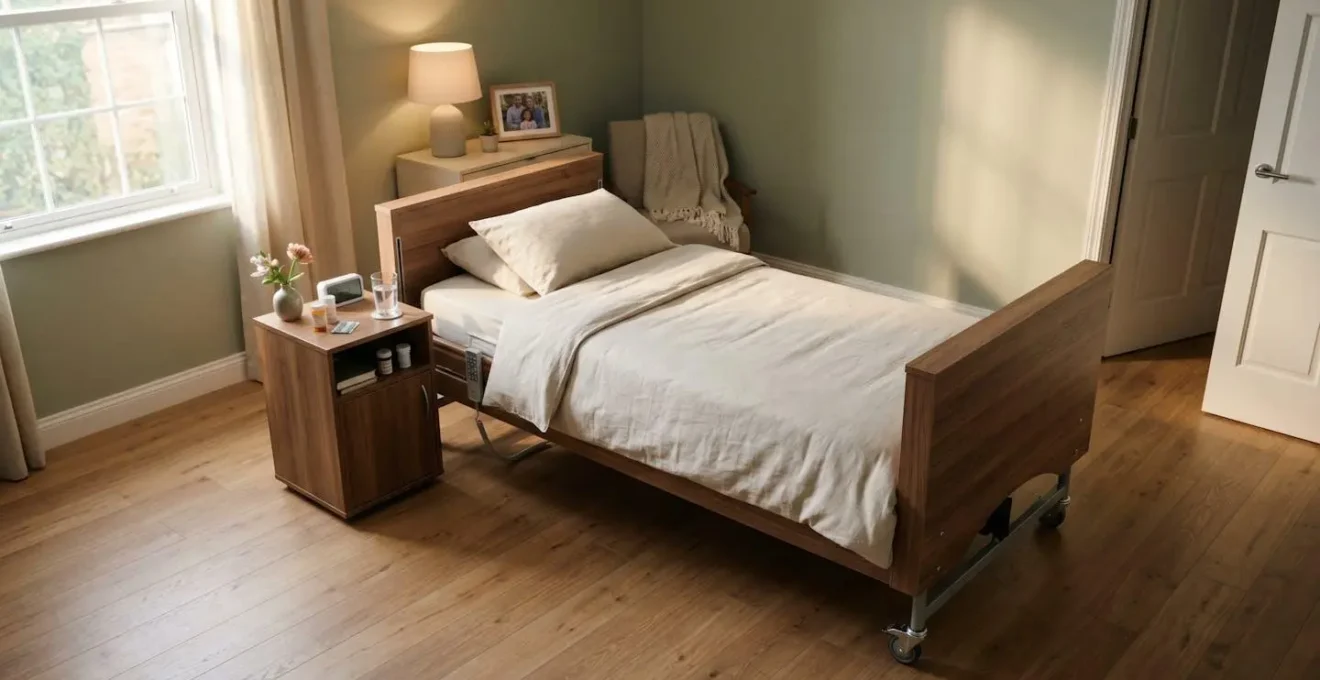
The right equipment for end-of-life home care is not just about medical function; it’s about creating a safe sanctuary that protects the carer from injury and preserves the patient’s dignity.
- An adjustable-height profiling bed is the single most important investment to prevent back injury for family carers.
- A high-specification foam mattress is often a more comfortable and cost-effective choice than an air mattress for pressure sore *prevention*.
- Equipment safety relies on a compatible system; mismatched beds, mattresses, and bed rails are a primary cause of lethal entrapment accidents.
Recommendation: Prioritise purchasing an integrated bed system (bed, mattress, and rails from one manufacturer) that has a non-clinical, residential appearance to balance safety with a homely feel.
The call from the hospital has come. Your relative is coming home for end-of-life care. This is a moment filled with a complex mix of love, responsibility, and anxiety. Your focus immediately shifts to the practicalities: how do you transform a familiar bedroom into a space that is safe, comfortable, and functional for care? The default answer often involves a clinical-looking hospital bed and a list of medical supplies, turning a personal sanctuary into a sterile environment. You know you need a special bed and mattress, but the choices feel overwhelming.
The challenge is not simply acquiring equipment. It is about navigating a difficult transition with grace and compassion. How do you balance the non-negotiable needs of medical care with the very soul of a family home? How do you ensure the room works for the person receiving care, but also for the family members who will be providing it, often lifting and repositioning their loved one multiple times a day? This task is about much more than furniture; it is an act of profound love and respect.
This guide is different. It’s not just a checklist of items to procure. As a palliative care nurse, my aim is to walk you through the thinking process behind each choice. It’s about making a series of informed, compassionate decisions that protect both your loved one’s dignity and your own physical and emotional well-being. We will explore how to select equipment that is not only safe and effective but also helps to preserve the feeling of home, creating a peaceful environment for this final, important journey.
This article will guide you through the critical decisions you need to make, from the bed itself to the layout of the room. By understanding the ‘why’ behind each piece of equipment, you can feel confident in creating a space that is truly supportive for everyone involved.
Summary: What Medical Equipment Should a Home Bedroom Have for End-of-Life Care?
- Why Does Incorrect Bed Height Cause Back Injuries in Family Carers?
- How to Choose a Hospital-Style Profiling Bed for Home Use Without Clinical Coldness?
- Foam vs Air Alternating Mattress: Which Prevents Pressure Sores for Bedbound Patients?
- The Furniture Placement Mistake That Blocks Emergency Stretcher Access
- When Should You Prepare the Bedroom Before Your Relative’s Discharge from Hospital?
- Why Have Some Bed Rails Been Recalled for Entrapment Deaths in the UK?
- Why Does the NHS Provide Some Equipment Free While You Must Buy Other Items?
- How Much Weight Can a Clamp-On Bed Rail Support for a Heavy Adult?
Why Does Incorrect Bed Height Cause Back Injuries in Family Carers?
When providing care for someone in bed, the single greatest physical risk to the family carer is back injury. The repetitive strain of bending over a standard-height domestic bed to help with washing, repositioning, or changing sheets puts enormous pressure on the lumbar spine. Each task performed at an awkward, stooped angle accumulates, leading to muscle fatigue, strain, and eventually, debilitating injury. This isn’t just a risk; it’s a statistical reality. In the professional care sector, 21% of care worker injuries are linked to lifting and carrying patients, a figure that underscores the physical demands of the role you are about to take on.
This is where the concept of carer ergonomics becomes paramount. The solution is not for you to “lift with your knees” over an unsuitable bed; the solution is to bring the patient up to a safe working height for you. A hospital-style profiling bed with height adjustment is the most critical piece of equipment for preventing carer injury. By raising the entire bed to waist level, you can perform all care tasks with a neutral, upright posture, protecting your back from cumulative damage. This feature transforms caregiving from a physically hazardous activity into a sustainable one.
The effectiveness of mechanical aids in protecting caregivers is well-documented. A comprehensive 2023 review of studies confirmed that using patient lifting and transferring devices, including height-adjustable beds, significantly reduces musculoskeletal injury rates and perceived low back pain among healthcare staff. Investing in a profiling bed is not a luxury; it is an essential safety measure that protects your ability to continue providing care for your loved one.
How to Choose a Hospital-Style Profiling Bed for Home Use Without Clinical Coldness?
The very term “hospital bed” can evoke a sense of fear and finality, conjuring images of cold metal frames and sterile environments. For many families, the biggest emotional hurdle is the thought of this clinical object dominating a beloved bedroom. The good news is that design has evolved significantly. You no longer have to choose between medical function and a homely aesthetic. The goal is to find a bed that offers dignified functionality.
Modern profiling beds for home use are designed to look and feel like high-quality domestic furniture while hiding their advanced mechanical features. Look for models with wooden headboards and footboards, upholstered surrounds in soft fabrics, and concealed mechanisms. These small details make an enormous difference in preserving the room’s character as a bedroom, not a ward.
As you can see in the image above, a carefully chosen profiling bed can blend seamlessly into its surroundings, providing all the necessary functions—height adjustment, back and leg profiling—without sacrificing warmth and style. This approach respects the patient’s identity and their connection to their home environment. As industry experts at Renray Healthcare note, the perception of these beds is changing:
Profiling beds don’t have to look and feel clinical, uninviting or intimidating. Many profiling beds now come in a range of contemporary designs and finishes that enables them to blend in with most decor.
– Renray Healthcare, Renray Healthcare’s Profiling Bed Promise
When choosing, focus on the finish and materials as much as the features. A warm oak or walnut finish, a soft grey fabric surround—these choices help to create a sanctuary space, a place of peace and comfort rather than a clinical sickroom.
Foam vs Air Alternating Mattress: Which Prevents Pressure Sores for Bedbound Patients?
For anyone who will be spending most of their time in bed, preventing pressure sores (also known as pressure ulcers or bedsores) is a top priority. These painful skin injuries are caused by prolonged pressure on one part of the body. The debate often centres on two types of specialist mattresses: high-specification foam and alternating-pressure air mattresses. The choice is not as straightforward as “one is better than the other”; it is an informed choice based on the specific situation.
A landmark UK study provided crucial clarity on this issue. The 2019 “PRESSURE 2” trial, led by the University of Leeds, was one of the largest of its kind. It compared the two mattress types for over 2,000 high-risk patients and found a surprising result: for the *prevention* of pressure sores, there was no significant clinical difference between the two. High-specification foam mattresses were just as effective as the more complex air mattresses.
However, the study highlighted a critical difference in patient experience. Some patients found the air mattresses unsettling; the constant movement and the noise of the pump could disrupt sleep and create a feeling of instability. Given that specialist foam mattresses are also significantly less expensive, they often represent the best choice for comfort, quality of life, and value when the primary goal is prevention. But there is a crucial exception. For patients who *already have* an existing pressure sore, an alternating air mattress is often the recommended tool for treatment. The constant shifting of pressure points can actively help the damaged tissue to heal. This is why NICE (the UK’s National Institute for Health and Care Excellence) often recommends them in a treatment context.
The Furniture Placement Mistake That Blocks Emergency Stretcher Access
In the quiet, day-to-day rhythm of home care, it is easy to overlook the need to plan for an emergency. The single most common and dangerous mistake in setting up a care bedroom is poor furniture placement that obstructs access for paramedics. In a crisis, every second counts, and a clear, direct path from the front door to the bedside is not a convenience—it is a lifeline. Paramedics need sufficient space to bring in a stretcher, position it alongside the bed, and safely transfer the patient.
To understand the space required, it’s helpful to know the equipment’s size. Standard ambulance stretchers are about 24 inches wide and 7 feet long. However, the crucial dimension is the turning circle and the space needed for two crew members to work on either side. A narrow hallway, a tight corner, or a cluttered room can make a safe evacuation impossible. You must think like a paramedic when arranging the room, ensuring there is a clear, unobstructed pathway at all times. This means positioning the bed so that at least one side is fully accessible and keeping the route to the door free of chests of drawers, chairs, or decorative items.
Your 5-Point Checklist for Emergency Access
- Entry Point: Is there clear, step-free or ramped access for a wheeled stretcher to enter the property? If not, can the patient sit in a carry chair?
- Clear Pathway: Can two people walk side-by-side from the front door to the bedroom without turning sideways or moving furniture?
- Bedside Space: Is there enough room for an ambulance crew to work on both sides of the bed if necessary? At a minimum, one side must be completely clear.
- Stairwell Clearance: If the bedroom is upstairs, are the stairs and landings wide enough for a two-person carry chair operation? Remove any obstructions like plants or side tables.
- Doorway Width: Check that all doorways on the access path are wide enough for a stretcher or carry chair to pass through without difficulty.
This foresight is a crucial part of creating a truly safe environment. It’s a practical step that you hope you’ll never need, but one that could make all the difference in an emergency.
When Should You Prepare the Bedroom Before Your Relative’s Discharge from Hospital?
The transition from hospital to home can be abrupt. The call confirming the discharge date often comes with little notice, creating a stressful scramble to get everything ready. To avoid this, it’s essential to start the preparation process as early as possible, ideally as soon as the decision for home-based palliative care is made. A growing number of people are choosing to spend their final days at home, a trend seen in the US where recent data shows a majority of Medicare patients now receive hospice care at home. This shift makes proactive planning more important than ever.
A structured timeline can turn a chaotic process into a manageable one. Begin by liaising with the hospital’s discharge planner or the community palliative care team. They are your primary resource for coordinating the delivery of any NHS-provided equipment.
A good preparation schedule looks like this: * One Week Before (or as soon as possible): This is the time for major decisions and orders. Finalise the equipment you need to purchase or rent privately (like the bed and mattress) and confirm delivery dates. Remove any large, non-essential furniture from the chosen room to create a blank canvas. * Four Days Before: The room should be cleared. This is the time for any deep cleaning, painting, or minor repairs. If you have ordered any flat-pack items, such as a bedside table, assemble them now. * Two Days Before: The primary equipment, especially the profiling bed, should be delivered and assembled. Work with the delivery team to position it correctly, keeping emergency access in mind. * The Day Before Discharge: This is for final checks. Test all equipment functions: the bed’s height adjustment, the profiling controls, the side rails. Make the bed with fresh, comfortable linens. Arrange personal items, photos, and lighting to make the room feel warm and welcoming. Most importantly, create a backup plan. Delivery delays happen, so having a temporary setup ready in a downstairs living room can provide crucial peace of mind.
Why Have Some Bed Rails Been Recalled for Entrapment Deaths in the UK?
Bed rails, or side rails, seem like a simple safety feature to prevent falls. However, they can pose a lethal risk if not selected and fitted correctly. Tragically, there have been numerous deaths and serious injuries in the UK and worldwide due to entrapment, where a frail or confused person gets trapped in the gaps between the rail and the mattress, or between the rail and the headboard. This has led to product recalls and updated safety guidance from the MHRA (Medicines and Healthcare products Regulatory Agency).
The critical point to understand is that the danger does not come from a faulty rail, but from an incompatible system. The risk of entrapment is created by the specific combination of the bed frame, the mattress, and the bed rails. If a mattress is too narrow for the bed base, or too soft, it can create a dangerous gap along the side of the rail. If the rails are a generic “one-size-fits-all” model purchased separately from the bed, they may not align correctly with the bed’s structure. This concept of a ‘safety ecosystem’ is crucial.
As the UK-based care equipment specialists at Renray Healthcare explain, this compatibility issue is the core challenge:
The challenge for care homes is making sure the combination of profiling bed, mattress and side rails is safe and adheres to the standard, which can be a challenge, as beds and side rails are often purchased separately to mattresses.
– Renray Healthcare, Renray Healthcare bed safety guidance on UK standards compliance
To eliminate this risk, the safest approach is to purchase the bed, mattress, and rails as an integrated system from a single, reputable manufacturer. These systems are designed and tested together to ensure there are no dangerous gaps, regardless of the bed’s position or the mattress type used. Never add a third-party rail to a profiling bed without first confirming with the bed manufacturer that it is a tested and approved combination.
Why Does the NHS Provide Some Equipment Free While You Must Buy Other Items?
Navigating the costs of end-of-life care is one of the most confusing and stressful aspects for families. The central question is often: what will the NHS provide for free, and what will we have to buy ourselves? The answer lies in the principle of “medical necessity” versus “quality of life” enhancements. The NHS is legally obligated to provide the equipment that is deemed medically essential for your relative’s care at no cost. This typically includes a basic hospital bed if required, a standard pressure-care mattress, a commode, and other essential aids. This equipment is usually provided on a loan basis from the local Community Equipment Service.
However, the free equipment is often the most basic, functional model available. It does the job, but it may be clinical in appearance and lack the advanced comfort or aesthetic features you would choose for your own home. This is where private purchase comes in. Families choose to buy their own equipment when they want something that goes beyond basic necessity. For example, the NHS might provide a basic semi-electric bed, but you might want to purchase a fully electric, ultra-low height model with a beautiful wooden surround that matches the bedroom furniture. The difference can be significant for quality of life, turning a clinical necessity into a piece of dignified furniture.
The financial burden of this can be significant. While the specific study is from the US, recent research highlights the general strain on family caregivers, showing that many face substantial out-of-pocket expenses. The decision to purchase privately is therefore a balance between your budget and the desire to provide the most comfortable, dignified, and homely environment possible. It is a valid and common choice to supplement the free NHS provision with privately purchased items that enhance comfort and preserve the feeling of home.
Key takeaways
- The primary purpose of a profiling bed’s height-adjustment feature is to protect the carer from back injury, not for patient comfort.
- For pressure sore *prevention*, a high-specification foam mattress is often as effective as an air mattress, but more comfortable and affordable. Air mattresses are best reserved for *treating* existing sores.
- Bed safety depends on a compatible “ecosystem.” Never use bed rails that have not been specifically designed and tested for use with your exact bed and mattress combination to avoid lethal entrapment risks.
How Much Weight Can a Clamp-On Bed Rail Support for a Heavy Adult?
This is a critical safety question, and the answer is simple and direct: clamp-on bed rails are not designed to support the full body weight of an adult. Their purpose is misunderstood. They are intended as a light support for repositioning in bed, a steadying handhold for getting out of bed, or as a barrier to prevent rolling out. They are absolutely not designed to be used as a lever for a person to pull their entire weight up from a lying to a sitting position.
Applying that kind of force, especially from a heavier individual, places enormous stress on the clamp mechanism and the bed frame itself. This can lead to the rail suddenly slipping, bending, or breaking, causing a serious fall and injury at a moment of maximum vulnerability. The structural integrity of a clamp-on rail is simply not comparable to that of an integrated rail system that is bolted directly to the bed’s chassis as part of its core design.
For a heavier adult, or for anyone who relies on a rail to help them sit up, a clamp-on solution is not a safe choice. You must opt for a profiling bed with integrated, system-designed side rails. These are built and tested as part of the bed’s overall structure, designed to withstand the forces involved in patient transfers and repositioning. They provide a secure, stable point of contact that you and your loved one can trust completely. The safety and stability they offer are non-negotiable.
Preparing this space is one of the last, most meaningful acts of care you can provide. By making these informed, compassionate choices, you are not just setting up a room with equipment; you are creating a true sanctuary of peace, comfort, and dignity. Begin these conversations and planning stages today to give your loved one, and yourself, the gift of peace of mind.