The choice isn’t just about stairs versus no stairs; it’s about preserving your financial future and avoiding the costly trap of short-term fixes.
- Choosing a solution based on today’s needs, without considering a 5-10 year mobility prognosis, often leads to buying a second, more expensive adaptation later.
- Moving house incurs significant costs (stamp duty, fees) that could instead fund a comprehensive, long-term adaptation of the home you love.
Recommendation: Before deciding, create an honest mobility prognosis. Will you or your partner likely need a wheelchair in the future? This single question changes everything.
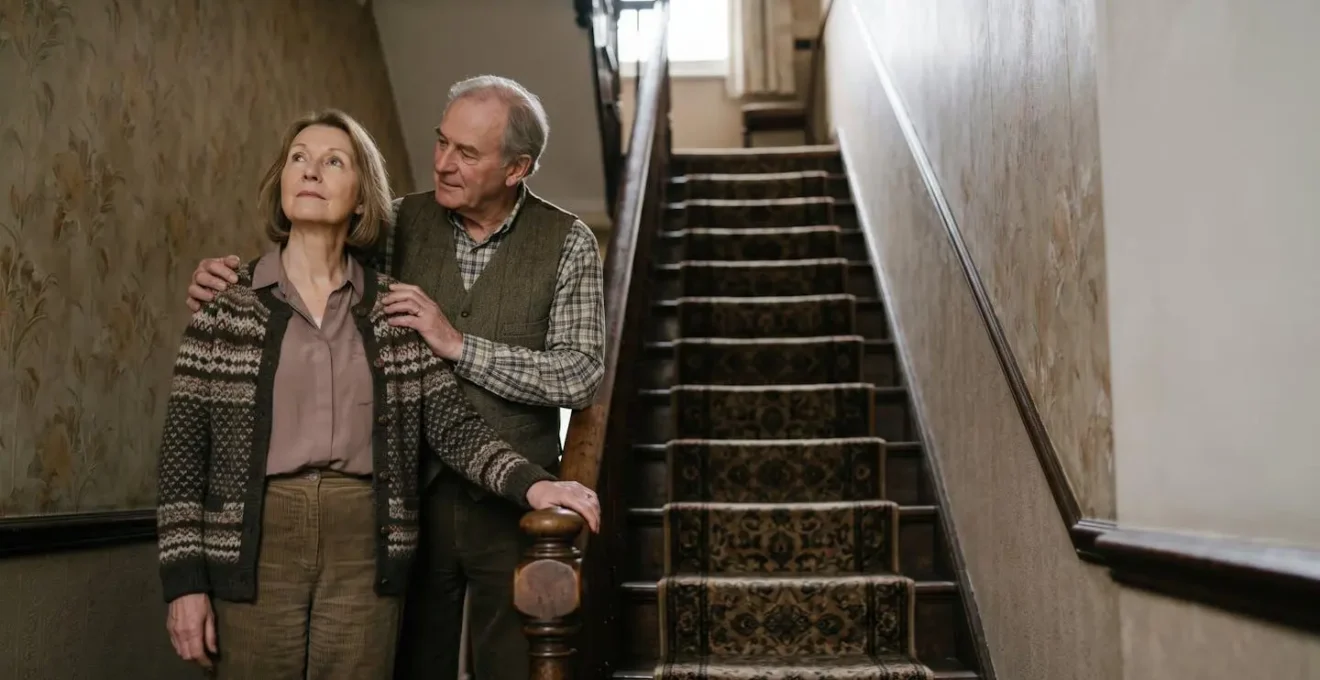
The conversation often starts quietly. A hesitation at the bottom of the stairs, a hand gripping the banister a little tighter, or the decision to bring everything needed downstairs to avoid another trip. For many couples in their sixties, the two-storey family home, once a symbol of achievement, slowly becomes a daily challenge. The stairs, in particular, transform from a simple architectural feature into a source of anxiety and risk. The default solutions seem obvious: either sell up and find a bungalow, or install a basic stairlift and hope for the best.
This decision, however, is one of the most significant financial and lifestyle choices you’ll make in your later years. Viewing it as a simple “move or adapt” dilemma overlooks a crucial factor: the trajectory of your future health. The most common mistake is solving the problem you have *today* without planning for the challenges you might face in five or ten years. This short-term thinking can be a costly trap, forcing a second, more disruptive, and far more expensive adaptation down the line, often at a time when you are most vulnerable.
But what if the key wasn’t just about managing stairs, but about making a strategic, long-term plan for your independence? What if the right choice could preserve your home’s equity, keep you in the community you love, and provide true peace of mind for the decade to come? This guide is designed to shift your perspective. We will move beyond the simple pros and cons to analyse the decision as a housing options advisor would: focusing on prognosis-based planning, true long-term costs, and smart funding strategies available here in the UK.
This article will provide a structured framework for making this critical decision. We will explore the real reasons stairs force people to move, compare the main adaptation options, and reveal the financial mistakes to avoid, helping you create a safe and sustainable plan for your future.
Summary: A Strategic Guide to Vertical Circulation in Your Home
- Why Do Stairs Force 60% of UK Seniors to Move Home Prematurely?
- How to Decide Between a Stairlift, Through-Floor Lift or Home Elevator?
- Stairlift vs Through-Floor Lift: Which Requires More Structural Work to Install?
- The Short-Term Thinking Mistake That Forces Second Lift Purchases Within 5 Years
- When Should You Install a Stairlift Before Climbing Stairs Becomes Dangerous?
- New vs Reconditioned Stairlift: Which Offers Better Value for a 5-Year Need?
- The Equity Release Mistake That Leaves Families Unable to Fund Care Costs
- How Much Does a Straight Stairlift Cost Installed in a UK Terraced House?
Why Do Stairs Force 60% of UK Seniors to Move Home Prematurely?
The image of retirement often involves settling into a comfortable, single-storey home. But for many, this move isn’t a choice but a necessity, driven by one primary obstacle: the staircase. It’s not merely an inconvenience; it represents the single greatest environmental hazard within the typical British home. For older adults, the daily act of climbing and descending becomes a high-stakes activity. Data from the Royal Society for the Prevention of Accidents (RoSPA) is sobering, revealing that over 60% of accident-related deaths among the elderly are caused by falls on stairs. This statistic transforms the staircase from a piece of architecture into a clear and present danger.
This risk is amplified in the UK’s housing stock, particularly in older terraced and semi-detached houses. These homes often feature staircases that are steeper, narrower, and have less tread depth than modern constructions, making them inherently more challenging to navigate safely. The physical effort required, combined with potential issues like dizziness, reduced strength, or poor eyesight, creates a perfect storm for accidents.
Faced with this daily risk, many individuals begin to self-limit their lives. They might move their sleeping quarters to the ground floor, effectively abandoning the upper level of their home. This “ground-floor living” is often the first step towards feeling that the house is no longer suitable. It’s not that the entire house has failed them, but that one specific element—vertical circulation—has become an insurmountable barrier. The emotional toll of this, feeling like a prisoner on one level of your own home, is often the final push that forces a premature and often unwanted house move, triggering a search for a bungalow simply to eliminate this single point of failure.
How to Decide Between a Stairlift, Through-Floor Lift or Home Elevator?
Once you decide to adapt rather than move, the next crucial step is choosing the right technology for vertical circulation. This isn’t just a product choice; it’s a long-term strategic decision that will impact your daily life, your home’s structure, and your finances. The three primary options—a stairlift, a through-floor lift, and a home elevator—serve different needs and have vastly different implications. A stairlift is the most common entry-point solution, while a through-floor lift offers a significant step up in accessibility, particularly for wheelchair users.
As the experts at CareSpaces UK highlight, the practical difference is profound, especially when considering future mobility. They note:
With a stair lift, you need to transfer from a wheelchair into the seat on the lift. That means either getting help from a carer, or using a hoist system. With a through-floor lift, you won’t have that problem: People using wheelchairs can move directly into position on the floor of the lift.
– CareSpaces UK, Stair lifts vs. Through-floor lifts comparison guide
This single point about wheelchair transfer is often the most critical factor in future-proofing your home. A stairlift may solve today’s problem of climbing stairs, but if a progressive condition leads to wheelchair use, it can become obsolete overnight. A thorough comparison of the features, costs, and requirements is essential before making any commitment.
The following table, based on a recent comparative analysis from industry specialists, breaks down the key differences to help guide your decision-making process.
| Feature | Stairlift | Through-Floor Lift | Home Elevator |
|---|---|---|---|
| Wheelchair Accessibility | Requires transfer from wheelchair | Wheelchair user travels in chair | Full wheelchair access |
| Installation Time | 1-4 hours | 2-5 days | 1-2 weeks |
| Starting Cost (UK 2026) | £2,000-£3,000 (straight) | £15,000+ | £20,000+ |
| Structural Work Required | Minimal (rail mounted to stairs) | Moderate (aperture through floor) | Extensive (dedicated shaft) |
| Building Regulations Approval | Not required for most | Required | Required |
| Space Impact | Rail on staircase only | Larger footprint, flexible positioning | Dedicated shaft space |
| Carrying Household Items | Not practical | Yes, with user | Yes, multiple items |
Stairlift vs Through-Floor Lift: Which Requires More Structural Work to Install?
The difference in installation between a stairlift and a through-floor lift is one of the most significant factors in the decision-making process. It’s the difference between a minor fitting and a small-scale construction project. A standard straight stairlift installation is a remarkably quick and non-invasive procedure. The rail is fixed directly to the stair treads, not the wall, and the entire process can often be completed by a specialist technician in just a few hours. There is typically no structural work, no plaster dust, and minimal disruption.
In stark contrast, a through-floor lift is a major undertaking. It requires precisely cutting a hole—an aperture—through the ceiling of the lower room and the floor of the room above. This is not a simple DIY task; it is a structural alteration that must be carefully planned and executed to ensure the integrity of your home’s floor joists. According to industry installation data, while the on-site work may take 2-5 days, the entire process from order to final installation can take 6-12 weeks, involving surveys, manufacturing, and scheduling a multi-disciplinary team.
Crucially, this type of work falls under UK Building Regulations. This means your local council’s Building Control department must be notified, and an officer will need to inspect and approve the work to ensure it meets safety standards. This process adds a layer of time, cost, and administration that is completely absent from a typical stairlift installation. The complexity is not to be underestimated; it requires a coordinated team of specialists to complete safely and legally.
Your Project Team Checklist: Who’s Needed for a Through-Floor Lift?
- Structural Engineer: To assess floor joists and load-bearing capacity before any cutting begins.
- Builder: To expertly cut the aperture through the ceiling and floor between the two levels.
- Electrician: To install a dedicated, compliant power supply for the lift’s motor and control systems.
- Lift Specialist: The certified technician who will install the lift mechanism, cabin, and all safety features.
- Plasterer and Decorator: To make good the walls and ceiling around the new lift enclosure, ensuring a seamless finish.
- Building Control Officer: The local authority official who inspects and signs off the work as compliant with UK Building Regulations.
The Short-Term Thinking Mistake That Forces Second Lift Purchases Within 5 Years
The most significant financial error in adapting a home is focusing solely on immediate needs. This is the “short-term thinking trap.” A couple might face difficulty with stairs and choose a stairlift as the quickest and cheapest solution. For a time, it works perfectly. However, if one partner’s mobility declines further due to a progressive condition like Parkinson’s, Multiple Sclerosis, or severe arthritis, leading to wheelchair dependency, the stairlift can become useless overnight. The user may no longer be able to safely transfer from the wheelchair to the stairlift seat, or even operate the controls.
This scenario forces a difficult and costly “second purchase.” The recently installed stairlift must be removed, and the family is now faced with the urgent need for a through-floor lift—the solution that was likely needed all along, had they planned with a 5-to-10-year prognosis in mind. The initial investment in the stairlift is largely lost, and they now face the much larger cost and disruption of installing a through-floor lift under pressure. This is not a hypothetical situation; it is a common and distressing experience for many families.
Case Study: The Cost of Not Future-Proofing
A client from UK Stairlifts provides a stark example. While in the hospital, he was fitted with a heavy-duty stairlift to aid his return home. However, during his hospital stay, his condition progressed significantly. Upon returning, he found he could no longer physically manage the transfer onto the lift’s seat. The specialist stairlift, purchased to solve his mobility problem, was now an expensive obstacle. The only viable path forward was to have it removed and install a through-floor lift, effectively paying for vertical circulation twice due to a rapidly changing mobility prognosis.
This case study demonstrates the core principle of prognosis-based planning. The critical question is not “Can I use a stairlift today?” but “What is the likelihood that I, or my partner, will need a wheelchair or be unable to self-transfer in the next decade?” Answering this question honestly, perhaps in consultation with a GP or occupational therapist, is the key to avoiding this expensive trap and making a truly sustainable investment in your home and future.
When Should You Install a Stairlift Before Climbing Stairs Becomes Dangerous?
The decision to install a stairlift is often delayed until after a fall or a significant health scare. This reactive approach is dangerous. The key is to act proactively, recognizing the early warning signs that the stairs are transitioning from an inconvenience to a serious hazard. Waiting too long puts you at risk of a life-altering event. According to data cited by the National Institutes of Health, the consequences of such an event are severe, confirming that there is a 10% mortality rate within one year following a fall among older adults. The goal is to prevent that first, fateful fall, not to react to it.
Installation should be considered the moment you or a loved one begin to change behaviour due to the stairs. It’s not about waiting for an inability to climb them, but about recognizing the fear, anxiety, or coping mechanisms that emerge. These behaviours are “red flags” indicating that the risk of a fall is increasing. If you see yourself or your partner in these descriptions, the time to act is now, not later.
Pay close attention to these subtle but significant changes. Are you planning your day to minimise trips upstairs? Do you avoid carrying things like a laundry basket? These are not just signs of aging; they are clear indicators that your relationship with your home’s layout has become unsafe. The appearance of any one of these red flags should trigger a serious conversation about installing a mobility aid before it’s too late.
Red Flag Checklist: Time to Consider a Stairlift?
- First stumble or near-miss: Any moment of dizziness, a foot catching on a step, or a hand slipping on the banister is a serious warning.
- Altered climbing techniques: Resorting to the “bottom-shuffle” or pulling oneself up with both arms are clear signs of struggle.
- Activity avoidance: Consciously planning the day to avoid using the stairs or neglecting the upper floor entirely.
- Inability to carry items: No longer feeling safe carrying everyday objects like laundry or a vacuum cleaner up or down.
- Professional concern: A GP, physiotherapist, or other healthcare professional has expressed concern about your balance or mobility.
- Needing to rest: Having to pause halfway up or down the staircase to catch your breath or steady yourself.
- Fear or anxiety: A growing feeling of dread or unease when faced with using the stairs, leading to self-confinement on one floor.
New vs Reconditioned Stairlift: Which Offers Better Value for a 5-Year Need?
When considering a stairlift, particularly if the need is predicted for a medium-term period of around five years, the question of “new versus reconditioned” inevitably arises. For many, a reconditioned unit can offer significantly better value without compromising on safety. A reconditioned or “used” stairlift isn’t simply taken from one home and installed in another. Reputable suppliers put them through a rigorous process: the unit is fully serviced, all safety features are tested, and any worn parts are replaced. The track is almost always supplied brand new, custom-cut to fit your specific staircase.
The primary advantage is, of course, cost. While prices vary, current UK market pricing shows that reconditioned straight stairlifts can start from around £1,250, offering a substantial saving compared to new straight models and an even larger one compared to curved stairlifts, which must be custom-made. This cost-saving can free up funds for other necessary adaptations or care needs. For a defined period of need, paying a premium for a brand-new unit may not be the most financially prudent choice.
Beyond price, there is also a significant advantage in speed, which can be critical if a stairlift is needed urgently after a hospital discharge. As the team at UK Stairlifts explains, the logistics are much simpler:
Straight stairlifts, especially reconditioned stairlifts can also be provided more quickly. This is because with a reconditioned stairlift, the lifts are waiting in stock; they don’t need to be ordered from the manufacturer.
– UK Stairlifts, Stair chairs for elderly people guide
However, it’s important to note a key limitation: reconditioned options are readily available for straight staircases, but are much rarer for curved ones, as a curved rail is a bespoke piece of engineering for each unique staircase. When assessing value, consider the warranty (often shorter on reconditioned models), the reputation of the supplier, and whether the savings outweigh the benefits of a brand-new machine for your specific circumstances.
The Equity Release Mistake That Leaves Families Unable to Fund Care Costs
Funding a major home adaptation like a through-floor lift can be daunting, with costs running into the tens of thousands. A common, but potentially risky, route is equity release. While it can seem like an easy way to unlock cash from your property, it should be approached with extreme caution. Releasing equity to pay for an adaptation reduces the total value of your estate, which can have serious knock-on effects, particularly when it comes to funding future residential care costs. It can be a short-term solution that creates a much larger long-term problem.
Before considering any commercial loan or equity release product, it is absolutely essential to explore all available grants and benefits. The UK has several schemes specifically designed to help homeowners with disabilities fund necessary adaptations. The cornerstone of this support is the Disabled Facilities Grant (DFG), a means-tested grant available from your local council. While the amount varies, government grant schemes provide significant sums, with the maximum in England being £30,000. This grant does not have to be repaid and is designed for exactly this purpose: making your home safe and accessible.
Beyond the DFG, a patchwork of other funding sources exists, from disability benefits that can be used to cover costs, to charitable grants. Many people are unaware they may qualify for this support and turn to commercial finance prematurely. Thoroughly investigating these non-repayable grants is the most important financial step you can take. It preserves your home’s equity, which may be vital for funding care in the years to come.
UK-Based Funding Alternatives to Equity Release
- Disabled Facilities Grant (DFG): A means-tested grant of up to £30,000 in England, applied for via your local council’s housing department.
- Personal Independence Payment (PIP) or Attendance Allowance: Non-means-tested disability benefits that can provide a regular income to help fund equipment and adaptations.
- Benevolent Funds for Ex-Professionals: Charities supporting former civil servants, teachers, armed forces veterans (via The Royal British Legion), and many other professions often provide grants.
- Turn2us Grant Search: An online tool to search a database of hundreds of charitable funds that may offer grants for home adaptations.
- Local Authority Discretionary Assistance: Some councils offer their own small, discretionary grants to top up DFG funding or assist those who don’t qualify.
Key Takeaways
- Prognosis Over Present: Base your decision on a realistic 10-year mobility forecast, not just your current abilities. The potential future need for a wheelchair is the most critical factor.
- The “Second Purchase” Trap: Choosing the cheapest option first (e.g., a stairlift) can lead to it becoming obsolete, forcing a second, more expensive purchase of a through-floor lift later.
- Grants Before Loans: Fully explore non-repayable options like the Disabled Facilities Grant (DFG) before ever considering equity release, to preserve your home’s value for future care needs.
How Much Does a Straight Stairlift Cost Installed in a UK Terraced House?
For a typical straight staircase found in many UK terraced houses, a stairlift represents the most affordable and least disruptive adaptation. As a starting point, a new, professionally installed straight stairlift generally costs between £2,000 and £3,000. Reconditioned models, as discussed, can offer savings, often starting around the £1,250 to £1,500 mark. The final price depends on the specific model, any additional features like a powered swivel seat, and the supplier.
However, the most significant factor affecting the final price you pay is VAT (Value Added Tax). Many people are unaware that they may not have to pay the standard 20% VAT on a stairlift. Under specific UK government rules, the purchase can be zero-rated or reduced-rated. According to HMRC VAT relief rules, if the stairlift is for a person with a disability or a long-term chronic illness, the supply and installation can be rated at 0% VAT. Furthermore, those aged 60 or over can qualify for a reduced 5% VAT rate, even without a specific disability. You will need to sign a declaration form for the supplier to claim this relief. This can represent a saving of hundreds of pounds.
When obtaining a quote, it’s vital to ensure you are getting a comprehensive price. A reputable supplier should not charge for an initial home survey. The quote should be a fully inclusive price, with no hidden extras. A particular point to clarify for terraced houses is whether a hinged track is needed. If the bottom of the staircase is close to a doorway (common in hallway layouts), a small section of the rail may need to fold away to prevent a trip hazard. This feature typically adds several hundred pounds to the total cost, so it’s essential to confirm if it’s included.
Checklist: What Your UK Stairlift Quote Must Include
- Free Home Survey & Assessment: A no-obligation visit to measure your staircase and discuss your specific needs.
- The Stairlift Unit: The quote must specify the exact make and model being offered.
- Full Installation: Confirmation that the price includes all labour, fixings, and materials for a complete installation.
- Demonstration & Training: A promise to provide a full demonstration on how to operate the lift safely.
- Warranty Period: A clear statement of the warranty duration for parts and labour (typically 1-2 years for new units).
- First Annual Service: Clarification on the cost of the first service, or confirmation if it is included free of charge.
- VAT Status Confirmed: The quote must clearly state the VAT rate being applied (0%, 5%, or 20%).
- Hinged Track Cost (if required): A separate line item for the cost of a hinged track if needed to avoid blocking a doorway.
Making the right choice between moving and adapting is a profound act of future-proofing your life. By shifting from reactive problem-solving to proactive, prognosis-based planning, you can avoid costly mistakes and create a home environment that supports your independence for years to come. The first step is an honest assessment of your long-term needs, followed by a thorough exploration of all your options—technological and financial. To begin this process, consider arranging a no-obligation home assessment from an occupational therapist or a reputable adaptation specialist.