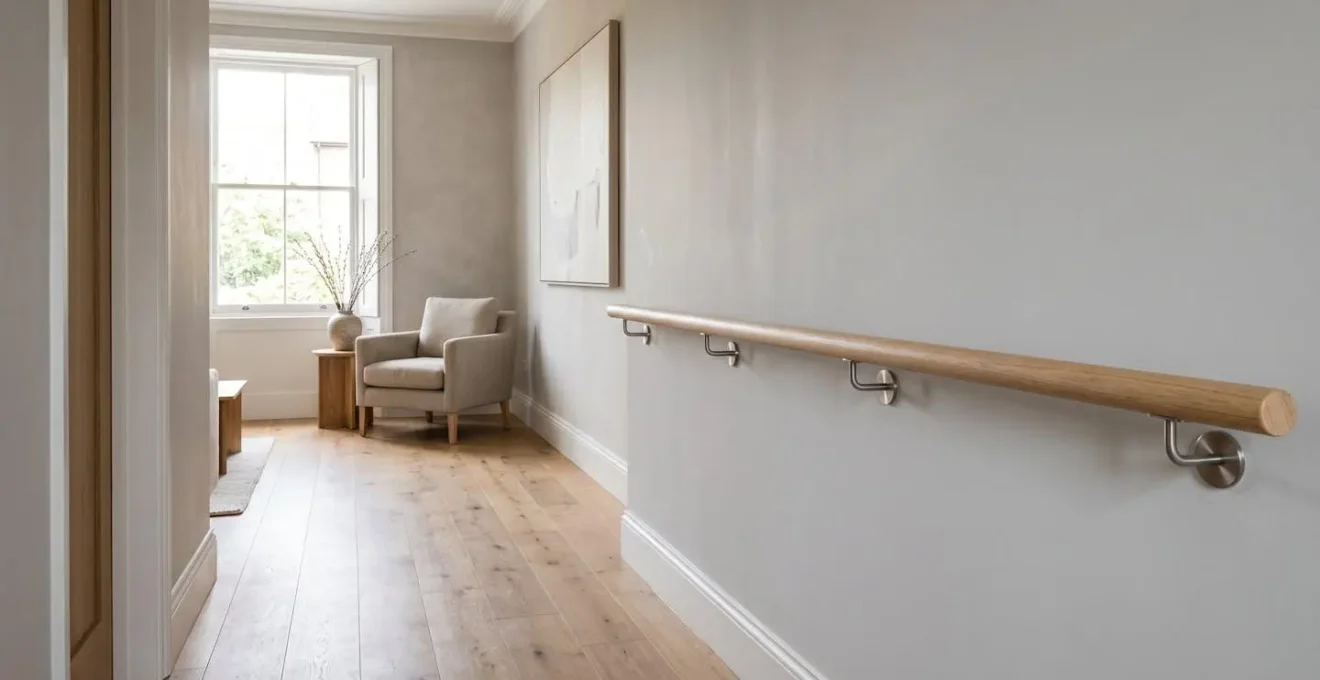
The key to successfully adapting a home for progressive mobility isn’t a checklist of equipment, but a phased strategy that balances immediate safety with long-term financial and emotional wellbeing.
- Proactively assess your home for hidden hazards before they cause a problem.
- Plan major adaptations in logical phases to manage costs and align with professional advice.
- Understand which changes add value and which can be reversed to preserve your home’s character.
Recommendation: Begin not with a catalogue, but with a simple, structured self-assessment of your home to understand your unique situation and priorities.
Receiving a diagnosis for a progressive mobility condition can feel like the world has shifted beneath your feet. As a UK homeowner, your immediate thoughts likely turn to your shared environment: the home you’ve built your life in. Suddenly, familiar spaces can seem fraught with potential challenges. The instinct is often to find quick fixes, to react to the immediate fears and uncertainties. This is a completely understandable response when facing the new reality of ensuring a partner’s safety and comfort.
Many guides will immediately present a catalogue of solutions: stairlifts, grab rails, walk-in baths. While these are all valuable tools, this approach often overlooks the most critical element: a coherent strategy. Simply installing equipment without a holistic plan can lead to a home that feels more like a clinical facility than a sanctuary, and can involve significant, poorly timed expenses. The true challenge isn’t just about adding safety features; it’s about thoughtfully evolving your home in a way that supports independence and dignity for the long term.
But what if the most effective approach wasn’t about a frantic rush to install hardware, but about a calm, phased process of proactive prevention? This guide is designed to give you that clarity. As a specialist accredited by the College of Occupational Therapists, I will walk you through a structured way of thinking about home adaptation. We will move beyond the simple ‘what’ and delve into the ‘why’, ‘when’, and ‘how’. We’ll start by understanding the real risks, learn how to identify them ourselves, and then build a phased plan that considers your home’s future value, your financial situation, and most importantly, your peace of mind.
This article provides a structured pathway, from understanding the most common risks to creating a strategic, long-term plan. The following sections are designed to empower you with the knowledge to make confident, informed decisions at each stage of the process.
Contents: A Strategic Guide to Home Adaptation
- Why Do 30% of Over-65s in the UK Fall at Home Each Year?
- How to Identify Hidden Fall Hazards in Your Home Before Calling an Occupational Therapist?
- Grab Rails You Install Yourself vs Professional Fitting: Which Is Safer?
- The Over-Adaptation Mistake That Makes Homes Harder to Sell Later
- When Should You Phase Home Adaptations to Spread Costs Over Two Financial Years?
- Why Do Loose Rugs Cause 40% of Home Falls Among Over-70s?
- Why Does an OT Assessment Cover More Than Just Bathroom Grab Rails?
- Which Room in Your Home Contains the Most Hidden Fall Hazards?
Why Do 30% of Over-65s in the UK Fall at Home Each Year?
The statistic is startling but essential to understand: falls are not rare, random accidents but a widespread public health issue, particularly within the home. According to NHS data, around 1 in 3 people aged 65 or over in the UK will experience a fall each year, a figure that rises to half for those over 80. This isn’t just about minor bumps; falls are the most common cause of injury-related deaths in people over 75 and can be a major catalyst for a decline in independence. The reasons are a complex mix of intrinsic factors (like muscle weakness, poor balance, or medication side effects) and extrinsic, environmental ones.
It is these environmental factors within our own homes that we have the most immediate power to change. A home that was perfectly safe a decade ago can present numerous challenges as mobility changes. The issue is often not a single, obvious danger, but an accumulation of small, overlooked risks: a poorly lit hallway, a slight change in floor level, or a bath that is difficult to get out of. These risks create a background level of stress and require constant, tiring vigilance to navigate safely.
However, the narrative doesn’t have to be one of fear. It can be one of empowerment. Taking proactive steps to modify the home environment has a profound impact. One study on home adaptations found that they not only improved objective safety but also significantly enhanced residents’ subjective experience. Participants reported that perceived difficulty during daily activities was reduced by a staggering 93.4%, and crucially, their fear of falling was reduced by 12.5%. This demonstrates that adaptations are not just about preventing an incident; they are about restoring confidence and improving overall quality of life.
How to Identify Hidden Fall Hazards in Your Home Before Calling an Occupational Therapist?
Before bringing in a professional, undertaking your own initial assessment is an empowering first step. It allows you to understand your home from a new perspective and prepares you for a more productive conversation with an Occupational Therapist (OT). The goal is to develop ‘hazard perception’—the ability to see your home not just as you know it, but as it might be experienced by someone with changing mobility, balance, or vision. This process turns you from a passive worrier into an active participant in creating a safer environment.
Begin by walking through your home at different times of the day, paying close attention to the pathways your partner uses most frequently. Notice the small things. Is there a trailing phone charger cable? Does a rug corner curl up? Is the transition between the living room carpet and the kitchen laminate seamless, or is there a small, catch-able lip? These minor details are often the primary culprits in a fall.
To make your home easier to navigate, especially for those with visual impairments, you can add high-contrast coloured tape on the edges of stairs and other borders. As a study by Age UK suggests, you should also consider:
- Securing or removing loose carpets and clearing general clutter from walkways.
- Ensuring lighting is adequate throughout—well-lit but not glaringly bright. Light switches should be easily accessible from the entrance of each room.
- Installing good outdoor lighting to illuminate the path to your door after dark, positioned carefully to avoid disturbing sleep or neighbours.
This initial survey helps you identify the ‘low-hanging fruit’—the quick, low-cost changes that can immediately reduce risk. It’s a vital part of the proactive prevention strategy.
As this image conveys, navigating a familiar space in low light can become an act of caution. Your goal is to eliminate the need for such tentative movements by making the environment itself inherently safer. This self-assessment provides an invaluable foundation for the more detailed analysis an OT will conduct later.
Grab Rails You Install Yourself vs Professional Fitting: Which Is Safer?
Grab rails are often the first adaptation people consider. They seem simple, affordable, and an obvious solution for providing support in key areas like the bathroom, hallway, or next to steps. The temptation to purchase one from a DIY store and install it yourself is strong, driven by a desire to act quickly and save money. However, this is one area where a well-intentioned quick fix can create a dangerous false sense of security, or even increase risk.
The safety of a grab rail depends on two factors: its placement and its fixing. An incorrectly positioned rail can force the user into an awkward or unstable posture, potentially causing a fall rather than preventing one. A professional, such as an Occupational Therapist, assesses the individual’s specific movement patterns—how they stand up, turn, and sit—to determine the precise height, angle, and location for optimal support. This bespoke placement is something a DIY installation simply cannot replicate.
Even more critical is the fixing. A grab rail is only as strong as the wall it’s attached to and the fixings used. A report from the Royal Society for the Prevention of Accidents (RoSPA) is deeply concerning, highlighting that an estimated 73% of grab rail failures are the result of improper DIY installation. A rail that pulls away from the wall under sudden weight is arguably more dangerous than no rail at all. Professionals understand wall structures, from solid brick to plasterboard stud walls, and use the appropriate heavy-duty fixings to ensure the rail can withstand the forces required in an emergency slip or stumble.
As the experts at Bathing Mobility UK state, the stakes are simply too high to get this wrong. Their guidance underscores the importance of professional expertise:
Incorrectly positioned rails may actually increase the risk of falls, which is why it’s vital to have them professionally fitted.
– Bathing Mobility, Bathing Mobility UK – Importance of Grab Rails Guide
While the desire to take immediate action is commendable, the evidence is clear. For a foundational safety feature like a grab rail, professional fitting is not a luxury; it is the only way to guarantee it will function safely when it is needed most.
The Over-Adaptation Mistake That Makes Homes Harder to Sell Later
A common concern when considering significant home modifications is their impact on the property’s future value and appeal. There is a real fear of creating a space that feels overly clinical or so specialised that it becomes difficult to sell later. This is what can be termed the ‘over-adaptation mistake’—implementing permanent, highly specific changes that may not be valued by a future buyer. However, this concern can be managed with strategic planning and an understanding of which adaptations are seen as assets.
The key is to differentiate between permanent and reversible changes, and to favour designs that are both functional and discreet. For instance, a beautifully designed wet room with a modern, level-access shower is a highly desirable feature for a wide range of buyers, not just those with mobility issues. It is seen as a luxury upgrade. In contrast, a bulky, dated bath lift or a permanent concrete ramp that dominates the front garden might be perceived negatively. The goal is to achieve universal design—creating spaces that are accessible to as many people as possible, without sacrificing aesthetics.
Some adaptations, far from devaluing a home, can actually increase its appeal to a broader market. Features like widened doorways or the installation of a discreet home lift make a property more accessible for families with pushchairs, people with temporary injuries, or those planning to have elderly relatives live with them. These are seen as ‘future-proofing’ features. The table below, based on data from UK adaptation specialists, provides a clear guide to the reversibility and potential value impact of common modifications.
This comparative data, from specialists like UK-based Stiltz Home Lifts, helps in making strategic choices. It allows you to balance immediate needs with long-term financial considerations, ensuring your home remains a valuable and appealing asset.
| Adaptation Type | Reversibility Level | Impact on Property Value | Estimated Reversal Cost |
|---|---|---|---|
| Modular ramps | Fully Reversible | Neutral to Positive | £0 (removable) |
| Stairlift | Semi-Permanent | Neutral | £200-500 (removal + wall repair) |
| Grab rails | Semi-Permanent | Neutral to Positive | £100-300 (removal + wall repair) |
| Wet room conversion | Permanent | Positive (if modern design) | £3,000-8,000 (full bathroom refit) |
| Widened doorways | Permanent | Positive (improved access) | £1,500-3,000 per doorway |
| Ground floor bedroom extension | Permanent | Positive (adds space) | Not typically reversed |
When Should You Phase Home Adaptations to Spread Costs Over Two Financial Years?
The cost of home adaptations can be a significant source of anxiety. Major works like a stairlift installation or a wet room conversion can run into thousands of pounds. The good news is that you don’t have to do everything at once. A core principle of a successful adaptation strategy is ‘Adaptation Phasing’—a structured approach that prioritises changes based on urgency and allows you to manage costs over time, including across different financial years to maximise available support.
The first step is to investigate financial assistance. In the UK, the primary source of funding is the Disabled Facilities Grant (DFG), a means-tested grant from your local council to help pay for necessary adaptations. The maximum amounts vary across the country; for instance, you can get up to £30,000 in England, £36,000 in Wales, and £25,000 in Northern Ireland. An Occupational Therapist’s assessment is usually required to support your DFG application, as they will recommend the adaptations deemed necessary and appropriate for your partner’s needs. Understanding this process is crucial for financial planning.
With funding in mind, you can create a phased plan. This involves categorising adaptations into immediate, medium-term, and long-term priorities. Immediate actions are typically low-cost and high-impact, like decluttering and improving lighting. Medium-term projects are the major works often covered by the DFG, like installing a stairlift. Long-term planning involves ‘future-proofing’ with technology like smart home devices once the essential safety structure is in place. By strategically timing the DFG application and major purchases, it is possible to spread the financial burden over two tax years (which run from 6th April to 5th April in the UK), making the entire process more manageable.
Your Phased Adaptation Action Plan
- Immediate Safety Audit: Conduct a thorough walk-through of your home to identify and mitigate all immediate trip hazards like loose rugs, trailing wires, and general clutter. Improve lighting in key areas with brighter bulbs.
- Needs & Goals Assessment: Sit down with your partner and list all the daily tasks that are becoming difficult (e.g., using the bath, climbing stairs, preparing meals). Define what successful, independent living at home would look like for you both.
- Professional Consultation & Funding Application: Contact your local council to request an Occupational Therapist (OT) assessment. Their formal report will be the cornerstone of your application for a Disabled Facilities Grant (DFG).
- Major Works Scheduling: Based on the OT’s priorities and your financial plan, schedule the installation of major adaptations. Consider timing significant purchases or works to fall into different UK tax years (before/after 5th April) to help manage cash flow.
- Future-Proofing Integration: Once core structural safety is addressed, plan for the longer-term integration of supportive technologies like motion-sensor lighting, voice-activated assistants, or personal alarms to further enhance independence.
Why Do Loose Rugs Cause 40% of Home Falls Among Over-70s?
Loose rugs are consistently identified by safety experts as one of the most significant and deceptive fall hazards in a home. While the specific figure of 40% is a commonly cited estimate, the underlying risk is confirmed by robust research. They seem harmless, a simple way to add warmth and colour, but their danger lies in the combination of several risk factors that align perfectly to cause a fall, particularly for an older person with subtle changes in gait or balance.
The primary mechanism of danger is a trip or a slip. A tripping hazard is created by the edge of the rug. Even a slight curl or a raised border of just a few millimetres is enough to catch the toe of a shuffling foot, leading to a forward fall. For someone with reduced strength or slower reaction times, recovering from that small trip is incredibly difficult. The second danger is a slip hazard. A rug without a proper non-slip backing can slide out from underfoot on a smooth surface like wood or tile, causing a backward fall, which often results in more serious injuries.
A comprehensive study published in the Journal of Injury & Violence Research analysed emergency department data and found that an estimated 37,991 adults aged 65 or older are treated annually in US EDs for falls associated with carpets and rugs, with the vast majority occurring at home. While this is US data, the environmental risk factors are identical in UK homes. The problem is exacerbated by age-related changes. A slightly altered gait, where the feet are not lifted as high, dramatically increases the likelihood of catching the edge of a rug. Reduced vision can also make it harder to spot a rumpled rug or a curled edge, especially in lower light conditions.
The safest solution, recommended by virtually all fall prevention experts, is to remove loose rugs entirely. If a rug is considered essential for warmth or comfort, it must be secured on all edges with double-sided rug tape or placed on top of a high-friction, non-slip underlay that covers its entire surface. Simply placing a small non-slip mat underneath is often insufficient, as the edges can still curl and create a trip hazard.
Why Does an OT Assessment Cover More Than Just Bathroom Grab Rails?
When people hear “Occupational Therapist,” they often think of specific pieces of equipment, like bathroom grab rails or a raised toilet seat. While prescribing equipment is part of their role, it’s only a small fraction of what a comprehensive OT home assessment truly involves. Thinking of an OT as an “equipment prescriber” misses the fundamental value they provide. A better way to see them is as a ‘holistic independence strategist’.
Their primary goal is to understand the unique interaction between a person, their daily activities (their ‘occupations’), and their environment. The assessment is a deeply personal and collaborative process. It is not about ticking boxes on a list of standard adaptations; it is about finding bespoke solutions that enable an individual to continue living a meaningful and independent life. The focus is on function and personal goals, not just on mitigating physical risk. This is why their assessment goes far beyond any single room or piece of equipment.
According to guidance from disability charity Scope UK, an OT will look at the whole picture. Their assessment typically includes:
- Personal needs and daily tasks: The OT will ask what you and your partner find difficult (from getting into the garden to using the kitchen) and, just as importantly, what activities are most important for you to continue doing.
- Physical demonstration: They may ask your partner to perform certain tasks, such as moving between rooms or getting in and out of a chair, to observe their specific movement patterns and identify precise points of difficulty.
- Home environment assessment: The OT conducts a full tour of the home, analysing layout, lighting, flooring, and furniture placement to understand how the space is used in practice.
- Future planning: A crucial element for progressive conditions is that the OT considers not just current needs but potential future changes, recommending adaptations that will remain suitable for the long term.
This holistic approach ensures that any recommended adaptations or equipment are genuinely useful, correctly positioned, and part of a wider strategy. They might suggest changing the way a task is done, or a simple, low-cost aid, rather than an expensive installation. Their expertise lies in creative problem-solving tailored to the individual, ensuring that the home continues to support, not hinder, a person’s life.
Key Takeaways
- Fall prevention is not about one-off fixes but a continuous strategy of proactive assessment and phased adaptation.
- Professional installation for key items like grab rails is non-negotiable for safety; DIY can create a false sense of security.
- Strategic, well-designed adaptations can enhance your home’s value, while a phased financial plan utilising grants like the DFG makes the process manageable.
Which Room in Your Home Contains the Most Hidden Fall Hazards?
While every room has potential hazards, data and expert consensus point overwhelmingly to one area as the highest risk: the bathroom. Its unique combination of hard surfaces, water, and complex movements makes it the epicentre of in-home falls. Research shows that a disproportionate number of fall-related injuries occur here. For example, one major study found that 35.7% of home fall injuries happen in the bathroom. This is often due to the need to navigate slippery surfaces while performing tasks that challenge balance, such as stepping in and out of a bath or shower.
However, risk is not static; it fluctuates throughout the day and moves around the house. A truly strategic approach to safety involves creating a ’24-hour hazard map’ of your home, understanding that different areas become higher risk at different times. A hallway that is perfectly safe at midday can become a major hazard at 2 a.m. during an urgent, disoriented trip to the toilet in the dark. The kitchen presents risks of spills during meal prep, while the living room can become hazardous in the evening due to declining natural light and fatigue.
Understanding this dynamic interplay of location, time, and activity is the cornerstone of advanced hazard perception. It allows you to move beyond simple fixes and implement smarter, more context-aware solutions. The table below outlines this 24-hour risk profile, offering a framework for thinking about safety throughout the entire home and the entire day.
| Time Period | Highest Risk Location | Primary Hazards | Risk Mitigation |
|---|---|---|---|
| Night (10pm-6am) | Bedroom & Hallway | Disorientation, poor lighting, getting to bathroom urgently | Motion-sensor night lights, clear pathways, bedside commode |
| Morning (6am-10am) | Bathroom | Wet surfaces, reaching/balance issues, medication side effects | Grab rails, non-slip mats, shower seat, adequate lighting |
| Midday (10am-4pm) | Kitchen | Spills during meal prep, reaching high/low cupboards, hot liquids | Non-slip flooring, lower work surfaces, perching stool |
| Evening (4pm-10pm) | Living Room & Stairs | Declining natural light, clutter accumulation, fatigue | Task lighting, handrails both sides of stairs, declutter routine |
| Transitions (All times) | Doorways & Thresholds | Level changes, surface transitions, narrow passages | Contrasting tape on edges, remove thresholds, widen doorways |
Embarking on this journey of home adaptation can be daunting, but it is also an act of profound care. By adopting a proactive, phased, and informed approach, you can transform your home into a place of security and comfort that will support you both for years to come. The next logical step is to begin this process with confidence. Start by obtaining a professional, personalised assessment of your specific situation to build a plan that is right for you.